Table of Contents
- Best flamingo watching locations in Ria Formosa Natural Park
- Guided boat tours and kayak trips for flamingo watching
- Responsible flamingo watching: conservation and habitat protection
- Frequently Asked Questions
In Portugal’s stunning Ria Formosa Natural Park, visitors can easily spot Europe’s magnificent greater flamingos. These elegant pink flamingos create a striking contrast against the Algarve landscape as they feed in saltpans and shallow lagoons. These wading birds are emblematic of the Ria Formosa wetland ecosystem and among the most photographed aquatic birds in southern Portugal. This guide helps travellers watch them responsibly while protecting their delicate habitat.
Best flamingo watching locations in Ria Formosa Natural Park
Across this 18,000-hectare nature reserve, flamingos gather in specific areas rich in their preferred food sources. The Ria Formosa Natural Park, an important wetland stretching along the Algarve coast in southern Portugal, functions as a crucial migratory stopover where large flocks of these iconic birds gather seasonally. This lagoon system, along with other lagoons such as Ria Formosa, hosts diverse birds in Ria Formosa including avocets and other species. These prime birdwatching spots allow visitors to observe wildlife behaviour naturally, without disturbance.
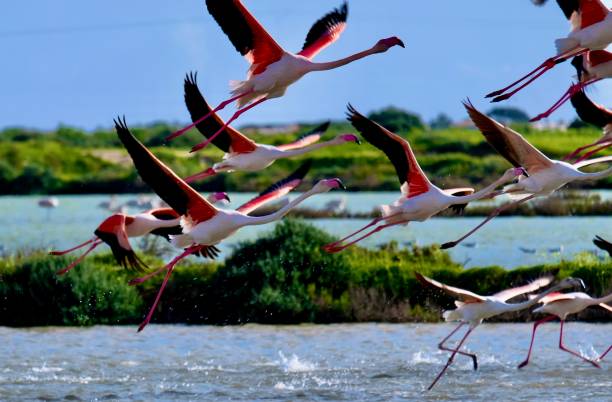
Saltpans and mudflats near Faro and Olhão
Near Faro, Quatro Águas offers year-round flamingo watching, with birds feeding in the shallows. The popular Ludo Trail, between Faro and Almancil, features observation platforms overlooking prime feeding areas.
- Salinas de Faro and São Lourenço saltpans: Active saltworks that attract daily flamingo visitors, accessible via short walks from town.
- Barra de Olhão and Gilão River mouth: Ideal for photography at low tide, when birds gather on exposed mudflats.
- Lagoa de Faro shallow lagoons: Dawn and dusk gatherings create memorable silhouettes.
These saltpans are among the most reliable places to find flamingos in the Ria Formosa Natural Park. Protected as part of Portugal’s leading natural park, they offer remarkable wildlife encounters.
Greater flamingos on Culatra, Armona and Barreta islands
Ilha Deserta’s tranquil waters shelter one of the park’s largest flamingo populations, making it an ideal destination to see flamingos in southern Portugal. Boat tours from Faro follow quiet channels near Culatra and Deserta, allowing for undisturbed viewing of these elegant birds. The islands serve as winter refuges where young flamingos learn feeding techniques.
Designated island trails provide excellent flamingo watching along lagoon edges. Within the Ria Formosa Natural Park, flamingos in Ria Formosa habitats offer exceptional viewing opportunities. Casa Fuzeta provides convenient access to guided kayak and boat trips showcasing flamingos and diverse ecosystems.
Accessible flamingo viewing platforms and nature trails
Quarteira’s western Ria Formosa boardwalk offers elevated views without disturbing the birds. At Marim Reserve, camouflaged bird hides allow close observation of flamingo behaviour in practice, including that of young birds.
For the best viewing experience of flamingos in Ria Formosa, it helps to time a visit carefully. The most rewarding periods are usually as follows:
- Early mornings: The cooler hours just after sunrise, typically between 6 and 9 am, are when birds are most active: feeding in shallow water as light mist lifts from the saltpans.
- Late afternoons: The light before sunset, usually between 5 and 7 pm, brings out the tones of their pink plumage while flocks begin to settle towards their roosting areas.
Light alone is only part of the picture. Tide cycles affect visibility just as much, and the difference lies in choosing a mid-tide window.
- Receding tides expose nutrient-rich mudflats where greater flamingos feed.
- Incoming tides gradually draw birds closer to the main observation points.
Essential gear for flamingo watching
With timing established, the right equipment makes the experience notably more precise. For a day in the park, these items are particularly useful:
- Binoculars (8×42 or 10×42): Essential for seeing details such as the black-tipped bills of courting birds.
- Telephoto lens (300 mm+): Useful for capturing the well-known pink reflections across Algarve waters.
- Weather-appropriate clothing: The wetland landscape can be breezy, so light layers tend to work best.
For those travelling light, several visitor centres across the Algarve, especially near Tavira and Olhão, rent good-quality optics. Worth noting: this can make a spontaneous detour into the reserve far easier.
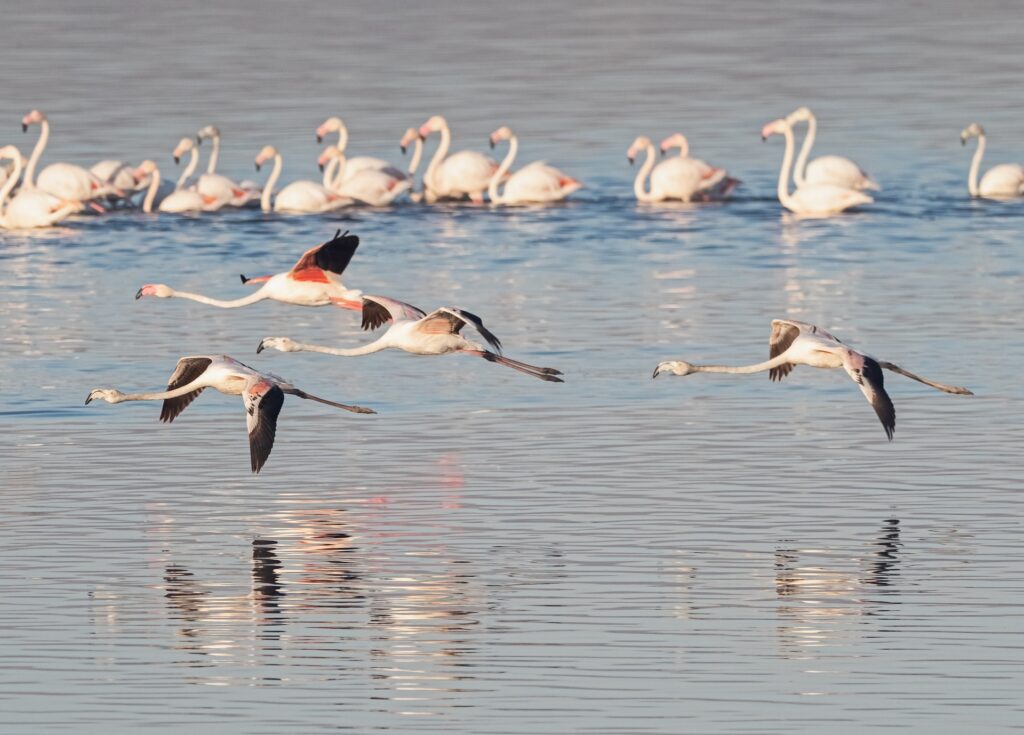
Photography tips for capturing flamingos
From there, photography becomes less about luck and more about patience. When photographing these birds in southern Portugal, a few simple choices tend to produce better results:
- Use the golden hours for soft, warm light that brings depth to pink plumage.
- Focus on group formations to reveal social behaviour rather than isolating single birds.
- Shoot from low angles at Marim salt pans to place birds in silhouette against sunrise or sunset.
Maintain a respectful distance, as flamingos are easily startled. Once you arrive, patience is often the kind of detail that leads to the most natural images.
The Ria Formosa Nature Park thrives when visitors observe wildlife carefully and without intrusion. That same approach often brings more authentic encounters with flamingos, as well as terns and other migratory birds, rare in this stretch of coastline.
As with photography, the final refinement is choosing the most active hours. Early morning, generally between 7 and 9 am, offers excellent conditions as birds forage before the heat builds; later in the day, the period between 5 and 7 pm often brings similarly gentle light and another good opportunity to watch flocks gathering for the evening.
- Low tide creates ideal feeding areas: when the water recedes, nutrient-rich mudflats emerge, attracting flamingos to feed near the viewing platforms in shallow lagoons.
- Clear weather offers better viewing: on still days, the water’s surface remains calm, making reflections easier to see, while windy conditions often push flocks of flamingos towards more sheltered spots.
- Skip the midday heat in summer: as temperatures rise, flamingos tend to move into deeper water, so early mornings or late afternoons usually offer better sightings.
Tide tables are available from the visitor centres in Faro and Olhão, making it easier to plan a visit around the best viewing conditions. Checking the weather forecast beforehand also helps: calm conditions keep visibility clear and make flamingos easier to observe across the reserve. The difference lies in timing, and a well-planned visit often leads to a more rewarding birdwatching experience in this remarkable natural park.
Guided boat tours and kayak trips for flamingo watching
That sense of timing extends naturally to how the lagoon is explored. The Ria Formosa Natural Park lends itself to both guided outings and independent discovery: one offers local expertise and equipment, the other a slower rhythm and greater flexibility.
From there, the seasons shape the experience further. Autumn, from September to November, brings peak flamingo numbers and warm light suited to photography, whilst winter, from December to February, introduces additional migratory species and as many as 20,000 waterfowl across the lagoon system. Spring, from March to May, offers strong early- season birdwatching as resident and returning species establish nesting colonies.
Boat excursions and kayak tours
With the seasons in mind, organised excursions become particularly appealing. The well-known Ria Formosa Birdwatching Tour typically includes stops near Culatra and Deserta Islands, where birds gather in the shallow lagoons; each outing begins with a briefing and detailed maps that clarify the most promising locations.
- Kayak tours: paddle quietly through the western channels for closer, more peaceful encounters with feeding birds.
- Sunset boat trips: evening departures from Faro and Cabanas de Tavira follow key migratory routes, often with flamingos set against the softer colours of dusk.
- Shuttle boat services: move between different lagoon stops throughout the day for a more flexible approach to birdwatching.
Most guided tours include binoculars and experienced guides, which makes identification far easier in practice: alongside flamingos, sightings may include waders, the elegant black-winged stilt, spoonbills, terns, and other notable birdlife. The Ria Formosa lagoon is not only a compelling birding landscape, but also a striking setting for refined stays throughout the year.
Independent flamingo birdwatching: transport and access
For those who prefer to set the pace themselves, access is straightforward. Public buses stop at key entry points, including the trailhead for the Ludo Trail near the airport and Quatro Águas, while local visitor centres provide up-to-date tide information and recent sightings. Worth noting: these small practical details often make the day far smoother once you arrive.
- Free parking areas: convenient places to leave a car can be found near Salgados Lagoon, Quinta do Lago, and the Faro Beach trail, with open views across the lagoon.
- Bike rentals: exploring by bicycle along the Marim wetlands and coastal paths allows birds to be observed with minimal disturbance.
- Ferry routes: regular ferries from Olhão and Fuseta provide straightforward access to the islands, where feeding flocks can be seen across the Algarve.
For the best independent birdwatching experience, it is worth arriving prepared: a zoom lens of at least 300mm, waterproof footwear, earth-toned clothing, sun protection, and offline navigation tools all make a clear difference in practice. Boaters should remain within marked channels to protect this delicate habitat and its nesting bird colonies.
Luxury accommodation with direct flamingo views
That same sense of proximity matters when choosing where to stay. Waterside rentals with private observation decks allow guests to watch flamingos in the Ria Formosa moving through their daily rhythms, while offering the comfort expected of a refined coastal address: thoughtful interiors, privacy, and easy access to trails and birdwatching platforms.
Beyond the threshold, Casa Fuzeta offers a carefully restored villa in Fuseta, set within the Ria Formosa Natural Park, a protected area known for its varied ecosystems. From here, the view opens onto the kind of detail that draws birdwatchers back repeatedly: large flocks of flamingos, elegant spoonbills, and other aquatic species visible throughout the day. Discover the historic villa in Fuseta.
From there, the wider landscape around Fuseta continues the experience with unusual ease, rare in this stretch of coastline. The Ria Formosa Natural Park offers rewarding birdwatching conditions, with Ria Formosa flamingos feeding alongside spoonbills and other wading birds in the shallow lagoon waters, particularly on early morning walks along the network of trails.
Responsible flamingo watching: conservation and habitat protection
By following eco-conscious practices, visitors help preserve these remarkable birds for future travellers to Portugal. Adhering to conservation guidelines not only safeguards the wetlands but also improves the quality of each watching experience.
Essential gear and preparation
That care begins with the right equipment. Pack good binoculars with 8x or 10x magnification, or a camera with a reliable zoom lens, to observe flocks comfortably from a distance: the difference lies in seeing clearly without causing disturbance.
Practical essentials include weatherproof shoes, muted clothing, sun protection and insect repellent. With limited facilities in the nature park, sufficient water and a few snacks matter, and a bird identification guide, printed or digital, helps with recognising different flamingo species and the other birds that share these waters.
Conservation etiquette
From there, behaviour on site becomes just as important. Use designated paths, observation points and approved water routes when exploring the Ria Formosa Natural Park, and keep at least 30 metres from feeding or nesting areas.
Never feed the flamingos: human food can damage their digestive systems and disrupt natural behaviour. Quiet observation and subdued colours are preferable, and any environmental concern should be reported promptly to the park authorities; worth noting, stillness usually leads to better sightings anyway.
Frequently Asked Questions
Where can I see flamingos in Ria Formosa?
To find flamingos in the Ria Formosa Natural Park, head to Quatro Águas near Faro or explore the Ludo Trail towards Almancil. Reliable viewing areas include the saltpans at São Lourenço, Salinas de Faro, and the islands of Culatra, Armona and Deserta, with further sightings possible at Lagoa dos Salgados and the wetlands near Marim.
As with any wildlife outing, timing shapes the experience. For memorable views of flamingos in Ria Formosa, low tide at the Gilão River mouth or Barra de Olhão is often especially rewarding: retreating water exposes feeding grounds where these pink birds gather in notable numbers.
The Ria Formosa Natural Park is a protected lagoon system on the eastern Algarve coast, with tidal flats, marshes and observation towers that attract both flamingos and many migratory birds. Dawn tends to be the quietest and most atmospheric time to watch, a quality rare in this stretch of coastline where light and stillness arrive together.
When is the best time to see flamingos in the Algarve?
The peak viewing season in the Algarve runs from November to March, when migratory flocks increase local numbers noticeably. Spring and autumn also bring strong sightings: March to May and September to October often offer excellent chances to see large groups of flamingos alongside other wetland birds.
From there, timing within the day makes a clear difference. Early morning and late afternoon usually offer the best light, and low tide is worth noting: flamingos gather near exposed mudflats, which makes them easier to observe across Portugal’s coastal lagoons. September and October are especially appealing for photography, with warm sea air and softer golden light, while greater flamingos remain present year-round in Ria Formosa Natural Park.
What other bird species can I observe in Ria Formosa?
Ria Formosa Natural Park supports remarkable birdlife, with more than 200 species associated with the wider area and 109 recorded within the protected park itself. Among the species regularly observed are black-winged stilts, spoonbills, terns, waders, herons, and egrets.
That variety reflects the park’s changing habitats: shallow lagoons, saltpans, mudflats, and marshes each attract different species through the year. Seasonal migration shapes much of what can be seen in practice, as resident birds are joined by autumn and spring visitors. Ria Formosa in the Algarve is a 233 km² Natura 2000 site, designated as a Special Protection Area for birds since 1988, an important framework for the conservation of both resident and migratory avifauna.