Table of Contents
- Choosing where to stay in the Algarve: three distinct zones and your base
- Where to stay in western Algarve: Lagos, Sagres and Atlantic beach towns
- Where to stay in central Algarve: Albufeira, Portimão, Carvoeiro and Vilamoura
- Where to stay in eastern Algarve: Faro, Tavira and lagoon towns
- Algarve beachfront villas and accommodation by traveller type
- Frequently asked questions
This guide covers the areas to stay in the Algarve that matter most to a discerning traveller: from the surf-shaped west coast to the lagoon-fringed eastern Algarve, each zone has its own character. Whether you seek dramatic cliff views, family-friendly resorts, or quieter village bases, the choice of town shapes the entire rhythm of your stay in the Algarve.
Choosing where to stay in the Algarve: three distinct zones and your base
The Algarve stretches for roughly 150 kilometres along the Algarve coast, and its geography changes more than first impressions suggest. Broadly, the region falls into three parts: the west coast, a central belt, and the eastern Algarve. The difference lies in the atmosphere each one creates, from morning light and street noise to how easily one town, village or beach leads to the next.
West, central or east: which Algarve zone suits your stay?
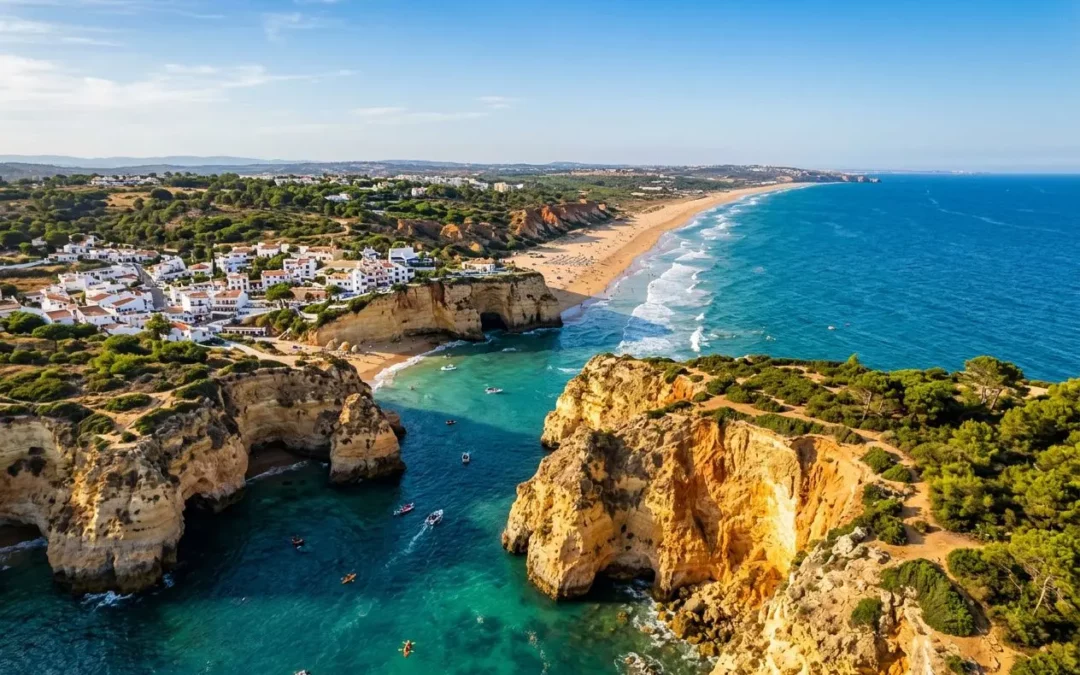
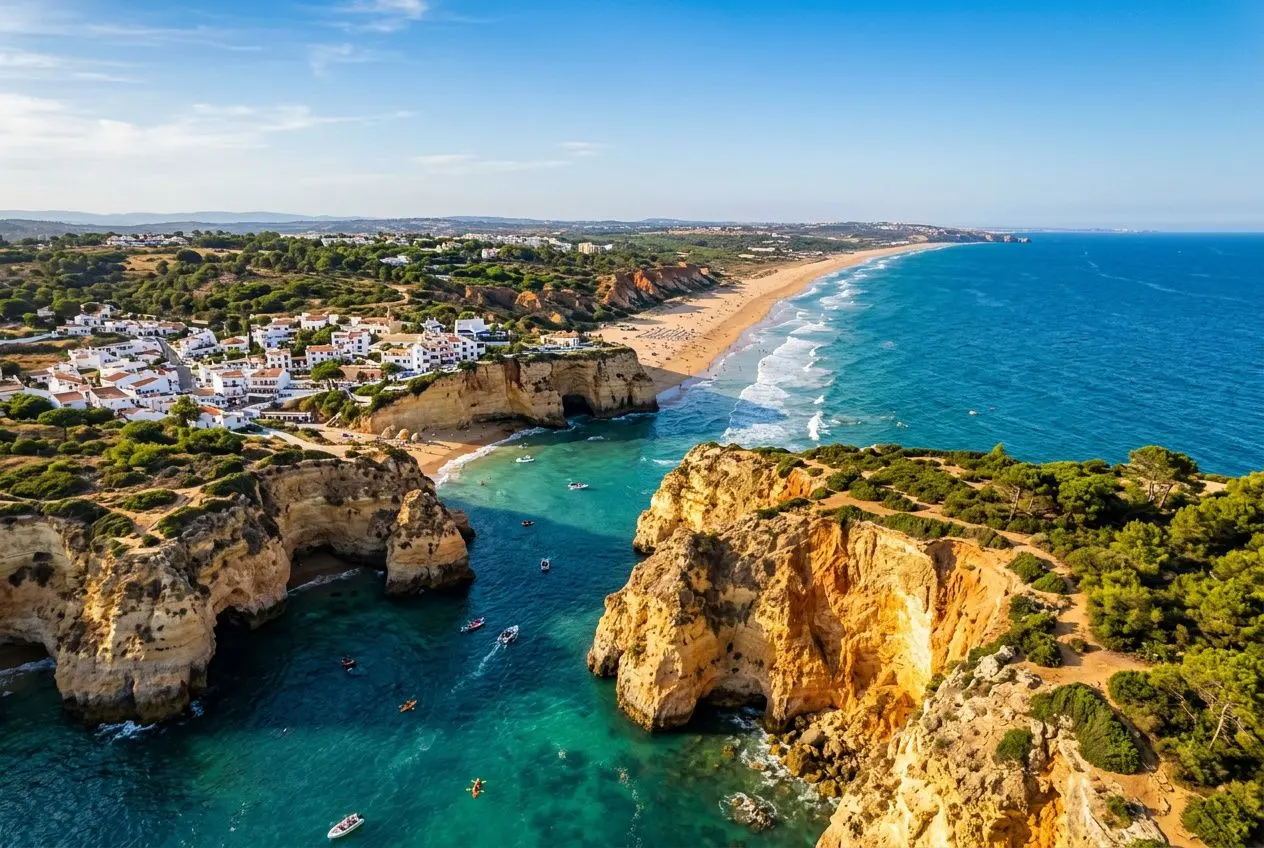
That broad distinction becomes practical as soon as priorities are clear. The west coast suits travellers drawn to rugged cliffs, Atlantic surf and protected landscapes; the central section holds the highest concentration of sandy beaches and resort towns; the eastern Algarve opens onto the Ria Formosa, with calmer water, barrier islands and more historic towns.
- Western zone Dramatic cliffs, surf beaches and protected parkland; best for walkers, surfers and travellers seeking fewer crowds and a wilder coastal atmosphere in the Algarve.
- Central zone The greatest concentration of sandy beaches, limestone caves and resort towns; well suited to first-time visitors and families wanting maximum amenity and easy transport across the Algarve.
- Eastern zone Ria Formosa lagoons, barrier islands and better-preserved historic towns; ideal for those who value authenticity, birdwatching and a calmer pace of daily life in the Algarve.
From there, access matters just as much as scenery. The regional train line runs from Lagos through Faro to the Spanish border, with at least seven services daily, making movement between the main towns in the Algarve realistic without a car. Smaller stops, ferries and local buses then extend that network into quieter places, whether a fishing village near Olhão or a slower-moving base around Tavira.
How long should you stay in the Algarve?
Length of stay changes the logic of where to sleep. Three days is the minimum that feels comfortable, especially once arrival and settling in are accounted for. In practice, a short trip works best with one central base in a well-connected town, rather than trying to sample several corners at once.
With five to seven days, a split stay begins to make sense. A western base and an eastern one offer a fuller reading of the Algarve: Lagos for the Atlantic edge, then Tavira or Olhão for the lagoon side. That pairing gives contrast without turning the holiday into a sequence of transfers.
Beyond a week, the map opens up. Inland places such as Loulé and the slopes around Monchique become easy additions, and the quieter village landscape behind the Algarve coast starts to matter as much as the shoreline itself.
Getting around the Algarve without a car
That slower rhythm remains possible even without driving. Faro Airport sits at the eastern end of the rail line, placing Faro within easy reach on arrival and keeping much of the region connected by train or coach. Casa Fuzeta, for example, is 35 minutes from the airport by direct regional train, at around €1.65 each way: worth noting for anyone planning a car-free stay in the Algarve.
Beyond the rail network, organised boat trips and guided excursions leave from marinas in Faro, Lagos and Tavira, so a hire car is far from essential. The flat Ecovia Litoral cycle path links stretches of the eastern Algarve coast without meeting a main road, while ferries and local buses fill in the final gaps. For travellers comparing resort towns with somewhere quieter, that transport flexibility is the kind of detail that can make a smaller town feel like the better base for staying in the Algarve.
Where to stay in western Algarve: Lagos, Sagres and Atlantic beach towns
The western stretch of the Algarve coast runs from Odeceixe down to Lagos, through landscapes that feel closer to protected wilderness than to the busier resort towns of central Algarve. Much of this shoreline falls within the Costa Vicentina protected area, which limits development and preserves a more rugged character: high cliffs, open headlands and long walking paths above the Atlantic.
Lagos: the most versatile town to stay in western Algarve
That sense of balance finds its clearest expression in Lagos. It is the most versatile town in this part of the Algarve region, with easy access to standout beaches, a lively harbour and a historic town centre that rewards time on foot. Praia da Dona Ana and Praia do Camilo are close by, while evenings here can stretch comfortably beyond dinner without tipping into the louder rhythm of larger resort towns.
For a first stay in western Algarve, Lagos often makes the most practical base. The Algarve luxury stays overview places it among the strongest starting points for those who want movement without complication, with rail links that make Portimão, Loulé and other larger stops straightforward to reach.
- Ponta da Piedade: iconic sea arches and cave formations reached by boat from Lagos harbour, among the defining sights of the Algarve coast.
- Historic old town: cobbled streets, the marina and the 15th-century Slave Market museum give the town cultural weight as well as beach appeal.
- Boutique accommodation: Casa Mãe reflects Lagos at its most considered, with local artwork, organic gardens and a style distinct from standard resort hotels.
From there, getting around is relatively simple. Lagos is the western rail gateway, which makes day trips east through the Algarve more manageable if the stay is planned around larger hubs rather than smaller villages.
Sagres: where to stay for surfers and Atlantic beach seekers
If Lagos offers range, Sagres offers exposure. Set at Portugal’s south-western edge, this small town faces the Atlantic without shelter, and the wind shapes the day from morning onwards. Praia do Tonel and Praia do Beliche draw surfers throughout the year, while the wider setting appeals to travellers looking for somewhere that feels genuinely removed in the Algarve.
Sagres is not a conventional resort town. It asks for a slower pace, with fewer distractions and a stronger sense of place. Memmo Baleeira captures that mood well, pairing minimalist design with a direct relationship to the ocean.
Smaller villages worth considering in western Algarve
Beyond Lagos and Sagres, western Algarve is shaped by smaller places that favour quiet over connectivity. A hire car remains the sensible choice for most of them, especially for travellers who want easy access to beaches, trailheads and local restaurants scattered along the west coast.
- Odeceixe: near the Alentejo border and around 3.5 kilometres from the sea, this village is popular with surfers in summer and with Rota Vicentina walkers in spring and autumn.
- Aljezur: a historic town inland from the coast, with a Moorish castle, a weekly market and straightforward access to some of the wildest beaches in the Algarve’s western region.
- Luz: a compact beach village south of Lagos, known for its sheltered bay, Roman tomb and calmer atmosphere.
Other small settlements such as Salema and Burgau tend to work better as outings than as a primary base, particularly for those who still want proximity to Lagos and its transport links. The same principle applies across this stretch of coastline: the farther west the setting, the greater the sense of seclusion, but the lighter the infrastructure supporting a stay in the Algarve.
That distinction shapes the accommodation landscape here: independently run guesthouses, rural quintas and smaller boutique properties are far more common than large-scale resorts, offering a more immediate sense of daily life in the western Algarve.
Where to stay in central Algarve: Albufeira, Portimão, Carvoeiro and Vilamoura
The central stretch of the Algarve, running from Portimão towards Faro, is where many first-time visitors choose to base themselves. Here, the region’s best-known scenery comes into focus: long golden beaches, limestone cliffs cut into coves, and a wide choice of stays, from practical apartments in the town centre to polished seaside retreats.
It is also the area where Algarve resorts gather most closely, spanning lively resort towns, quieter corners and purpose-built enclaves shaped around golf, marinas and spa-led stays.
Albufeira and Portimão: choosing your Algarve base and town
That range is clearest in Albufeira and Portimão. Albufeira is the better-known holiday town, with broad appeal built on beaches such as Praia da Oura and Praia dos Pescadores, a cobbled Old Town best seen early in the day, and nightlife around The Strip that continues well past midnight.
- Albufeira Old Town: Whitewashed lanes, independent restaurants and a fishing beach that still keeps a measure of local character, even in peak summer.
- Portimão harbour: A working waterfront with a dedicated museum, strong restaurant options and easy access to Praia da Rocha.
- Praia da Rocha: A long, wide beach just south of Portimão’s town centre, backed by ochre cliffs and easy to reach on foot from the central accommodation area.
The difference lies in atmosphere: Portimão still feels like a functioning town rather than a resort built entirely around visitors, while Albufeira is more fully shaped by tourism. In practice, both have strong transport links and accommodation across a broad price range, but Portimão tends to appeal to those who want an urban base with the beach close at hand when staying in the Algarve.
| Feature | Albufeira | Portimão |
| Nightlife | Very lively; The Strip draws large crowds nightly | Moderate; harbour bars and restaurants, quieter overall |
| Beach quality | Praia da Oura, Praia dos Pescadores; busy in summer | Praia da Rocha; wide, sheltered, easily walkable |
| Local character | Heavily tourism-oriented, Old Town retains some charm | Working town with genuine fishing and market culture |
| Transport links | Good road and bus connections; no train station | Train station; connections to Lagos and Faro |
| Best suited for | Groups, families seeking full resort facilities | Couples and families wanting balance of town and beach |
Where to stay in Carvoeiro and the Golden Triangle: Algarve luxury resorts
Beyond those larger centres, Carvoeiro offers a different scale. This cliff-edged village is especially rewarding in spring and early autumn, when temperatures stay mild, the coastal boardwalk is comfortable underfoot, and the pace slows to something more measured.
From there, the Golden Triangle, centred on Quinta do Lago, Vale do Lobo and Vilamoura, forms the high-end heart of the central Algarve. These areas sit roughly 15 to 20 minutes from Faro Airport and are defined by golf courses, refined spa hotels and quick access to the sea, the kind of detail that matters on shorter stays in the Algarve.
Quinta do Lago combines three leading golf courses with Martinhal family properties offering private pools and kids’ clubs. Vale do Lobo brings two championship layouts, an upscale spa and the Praça beach club. Worth noting, the Viceroy at Ombria Algarve has added a GEO-certified 18-hole course and residences with private pools, giving this part of central Algarve a more sustainability-minded resort option.
Vilamoura Algarve: where to stay for golf, marina life and resorts
That polished side of the Algarve coast comes fully into view in Vilamoura. This purpose-built town revolves around its marina: yachts, smart restaurants, five golf courses, a casino and five-star hotels gathered within a walkable setting. Once you arrive, very little lies beyond easy reach.
In contrast, inland stops bring another register altogether. Loulé, with its covered market and Moorish architecture, makes an appealing half-day from the coast, while places such as Silves and Alte show a more traditional side of the Algarve region. From the shoreline to the hills, the drive is short: often no more than twenty minutes from the central coast, whether staying near Albufeira, Carvoeiro or Vilamoura.
Where to stay in eastern Algarve: Faro, Tavira and lagoon towns
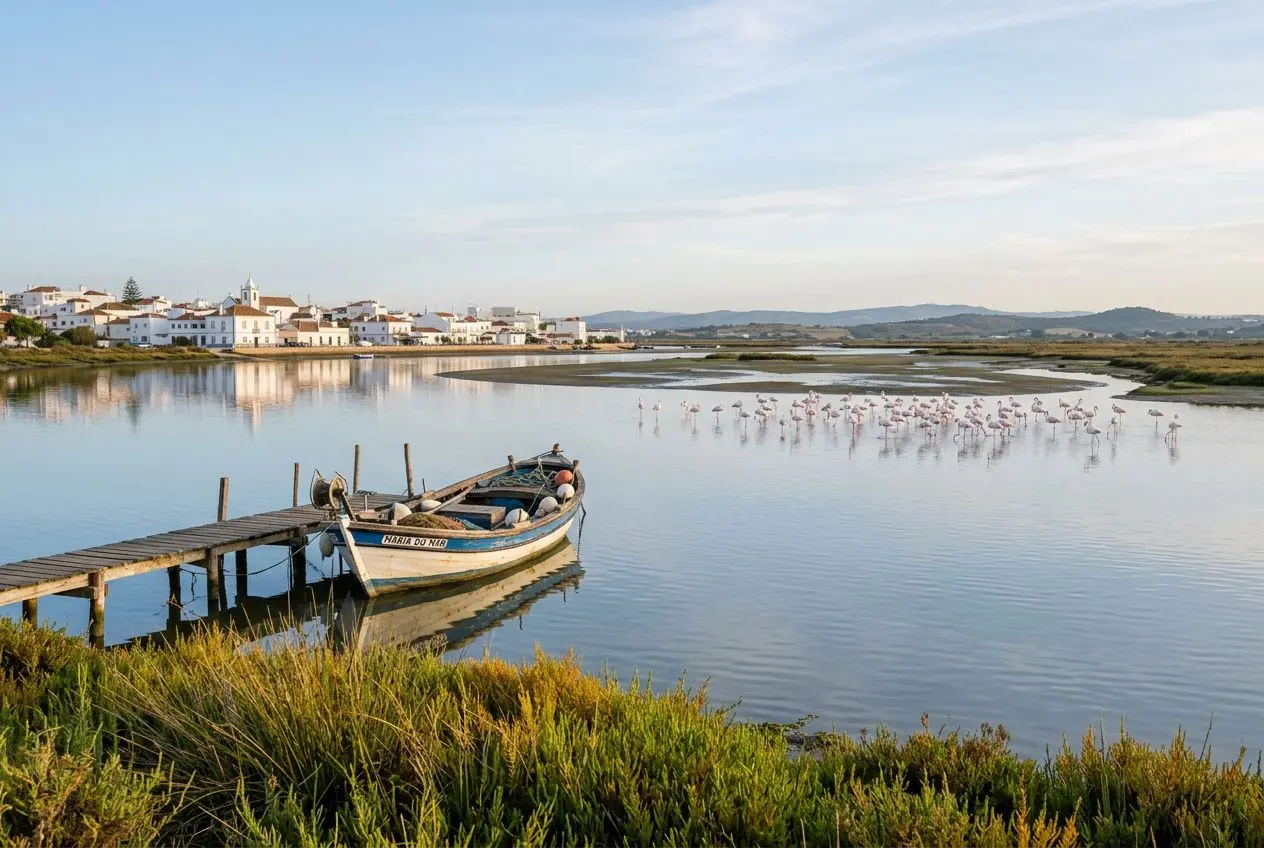
The eastern Algarve moves at a gentler pace than the central Algarve. Its historic fabric remains more intact, and the Ria Formosa Natural Park extends across more than 170 km² of protected lagoon landscape. On this side of the Algarve coast, the impression often runs deeper: less shaped by resort towns, more rooted in everyday Portuguese life.
Faro: the Algarve’s historic capital and transport hub
Faro is both a practical arrival point and a rewarding town in its own right. The international airport sits within the municipal boundary, while the walled Old Town opens onto cobbled streets, the Arco da Vila and the Cathedral: the kind of detail that gives a first sense of the region’s layered past. As a place to stay, Faro suits those who want a central base with substance rather than a purely functional stop.
- Old Town walls The medieval fortifications enclose a quiet quarter of historic buildings, small museums and the Cathedral, whose tower looks across rooftops towards the lagoon.
- Marina boat trips Faro’s marina is the departure point for boat excursions into the Ria Formosa islands, including Ilha Deserta and Ilha do Farol, both reachable in under thirty minutes by ferry.
- Transport connections From Faro station, the regional train runs east to Tavira and west across the Algarve coast; Uber, private transfers and car hire are available directly from the airport terminal.
- Loulé day trip Loulé lies around 15 minutes north by car, a historic market town with one of the region’s finest covered markets and a Moorish castle suited to an unhurried morning.
From there, the marina district shows a more contemporary side of Faro. Waterfront cafés and independent restaurants bring an easy evening rhythm, better suited to those who prefer a real town to purpose-built resort towns in the Algarve.
Where to stay in Tavira: historic town and Algarve island beaches
Tavira has long been considered one of the most appealing towns in the Algarve, and that reputation is easy to understand. The Roman Bridge over the Gilão River, castle gardens above the rooftops and distinctive tiled façades give the town a rare continuity of character. For couples and mature travellers in particular, Tavira offers a place to stay shaped by slower hours rather than organised entertainment.
That atmosphere is matched by the coast. Ilha de Tavira is reached by a short ferry crossing from the quay, turning the town into a cultural base with access to wide, pale sands that feel notably calmer than many beaches in the central Algarve zone. Early September is especially rewarding: the sea stays warm, while visitor numbers ease.
Beyond the historic centre, daily life remains visible. The market, independent restaurants and unhurried pace make Tavira one of the most liveable places to stay in the eastern Algarve.
Where to stay in Fuseta and Olhão: authentic Algarve fishing villages
If Faro and Tavira frame the eastern Algarve, Olhão and Fuseta show its working character more clearly. Olhão is known for flat-roofed terraces, ornate chimneys and its two market halls, along with a daily fish market that still serves the town before tourism. It remains an honest departure point for island ferries and one of the most distinctive towns in the Algarve.
From there, Fuseta offers a smaller-scale alternative. This fishing village sits around 25 kilometres from Faro Airport and remains well connected by train, ferry and the flat Ecovia cycling path, yet its pace is notably calmer, rare in this stretch of coastline. The Fuseta villa rental at Casa Fuzeta places guests in a restored 1903 property with a rooftop pool kept at 26–28°C, panoramic lagoon views and four en-suite bedrooms for groups of 4–12, within walking distance of the sea, fishing harbour, market and ferries to the barrier-island beaches.
Beyond the lagoon villages, Ferragudo sits further west in a different setting. Its whitewashed houses and hilltop church make it worth noting for travellers drawn to small-town character without the mood of larger resort towns in the Algarve.
Algarve beachfront villas and accommodation by traveller type
Choosing between a private villa, a boutique hotel and a five-star resort is not only a question of budget. It shapes the rhythm of the stay from the outset. Along protected stretches of coast, planning rules often place smaller properties in orange groves, quiet village lanes or just beyond the town centre, while purpose-built resorts tend to occupy the most direct beachfront positions: understanding that distinction early saves time when comparing accommodation options across the central Algarve and beyond.
How to choose and verify the right Algarve accommodation
The most useful beachfront villa tips start before any listing is opened. Define the preferred setting first: cliff views, lagoon frontage, marina life or countryside. From there, build a clear checklist covering the details that matter in practice, such as a heated pool, an unobstructed sea view, climate control, spa access and easy access to the town centre.
Verification matters as much as preference. Use reputable platforms with interactive maps, floor plans and recent reviews, then focus on comments that mention host responsiveness and day-to-day accuracy. Ratings above 9.5 out of 10, together with verified visitor photographs, usually give the clearest picture of what a property truly delivers.
Best area to stay in Algarve for families and couples
The best area to stay in Algarve for families depends largely on the age of the children and the balance sought between full resort infrastructure and local character. In the central Algarve, Pine Cliffs and Martinhal properties in the Golden Triangle remain strong accommodation choices for family stays: private pools, kids’ clubs, concierge support, surf lessons and direct beach access in a fully serviced setting.
- Families with young children: Martinhal Quinta and Pine Cliffs in the central Algarve, suited to those looking for easy access to the beach, private pools and organised family facilities.
- Couples seeking seclusion: Vila Joya near Albufeira, with thirteen suites, a two-Michelin-star restaurant, private beach access, a curated art collection and full butler service in an adults-only resort setting.
- Wellness travellers: Vila Vita Parc for its Six Senses Spa, yoga platforms facing the ocean, holistic treatments and nutrition menus; or Conrad Algarve’s Spa by Aman for a more pared-back restorative atmosphere.
- Groups and extended families: Casa Fuzeta in Fuseta, a restored 1903 villa with four en-suite bedrooms, smart home automation, a heated rooftop pool and easy access to island beaches and seafood restaurants for 3–14 guests.
For travellers drawn to cultural depth rather than resort polish, the difference lies in the setting. Tavira and Fuseta offer a more personal place to stay than larger Algarve towns such as Albufeira, with the Ria Formosa bringing calm, light and a sense of space that many newer developments cannot replicate. This part of the coast holds an unusual balance of daily life and restraint that few newer resort properties can match.
Some travellers prefer the larger towns in the Algarve for nightlife and resort convenience; families in particular tend to split between the highly serviced resorts of the central Algarve and the character-led villages near Tavira.
When to book Algarve accommodation and seasonal timing
July and August bring peak demand across Algarve towns, so premium properties such as Vila Vita Parc and Pine Cliffs are best booked at least six months ahead. In smaller places such as Fuseta, parking fills quickly in high summer: arriving before 10:30 am avoids the worst of it.
In contrast, the shoulder seasons from late April to June and again from September into October are often the most rewarding. Sea temperatures remain around 23–26°C, visitor numbers ease and rates soften as competition for the best properties falls away. Ferries run less crowded, restaurant tables are easier to secure, and the autumn light over the Ria Formosa settles into a softer, clearer quality.
Spring shifts the focus towards landscape. The western Algarve hills fill with wildflowers, while migratory birdlife peaks around the lagoons and channels of the east. Winter, from December to February, is mild at around 15–18°C, and many towns in the Algarve remain active: a good fit for travellers who value space, walking weather and a quieter sense of place.
Frequently asked questions
What is the best area to stay in the Algarve for families?
For families seeking full resort infrastructure, the central Algarve sets the standard: the Golden Triangle, including Quinta do Lago, Vale do Lobo and Vilamoura, brings together private pools, kids’ clubs, concierge services and direct beach access in one location. Martinhal properties and Pine Cliffs are among the accommodation names most often considered for this style of stay in the Algarve.
In contrast, families drawn to a slower rhythm often look east. The fishing village of Fuseta offers a quieter base near Faro, with flat pushchair-friendly paths, ferry access to calm barrier-island beaches and a fenced villa option with pool safety equipment; Casa Fuzeta is equipped accordingly: pool safety features, flat terrain and a 25-minute drive from Faro Airport make the logistics of a family stay straightforward.
Which Algarve town is best to stay in without a car?
Faro, Tavira, Olhão and Portimão all sit on the regional train line, with regular services running between Lagos and the Spanish border at least seven times a day.
From there, Fuseta remains especially straightforward. A direct regional train from Faro Airport takes about 35 minutes and costs around €1.65, leaving travellers roughly 300 metres from the beach promenade; once you arrive, the ferry to the barrier islands departs every 10 to 20 minutes in peak season, and the flat Ecovia Litoral links this part of the coast to nearby village stops without the need for a car.
Is Lagos or Albufeira better for an Algarve stay?
The difference lies in the kind of holiday each town supports. Lagos appeals to travellers who value dramatic cliff scenery, a historic town centre, easy connections west towards Sagres and an evening atmosphere that extends beyond nightlife alone.
Albufeira, by comparison, is geared more clearly towards a classic beach-resort break. It offers a broader spread of accommodation across price points and one of the busiest nightlife scenes in the Algarve.
For a group focused on beaches and late nights, Albufeira usually makes more sense for staying in the Algarve; Tavira and Olhão suit a quieter eastern stay, while Faro works well as a practical central base for onward travel across the region.