Table of Contents
- What makes the Ria Formosa natural park special
- Wildlife and birdwatching in the Ria Formosa
- Activities and experiences in the Ria Formosa natural park
- Frequently asked questions
For travellers planning a trip to the Algarve, the question of whether visiting Ria Formosa is worth it tends to come up early. This guide looks at whether this natural park belongs on the itinerary. It covers the wildlife, the landscapes and the practical activities that make a trip to the Ria Formosa Natural Park a defining part of a stay on the Portuguese coast.
What makes the Ria Formosa natural park special
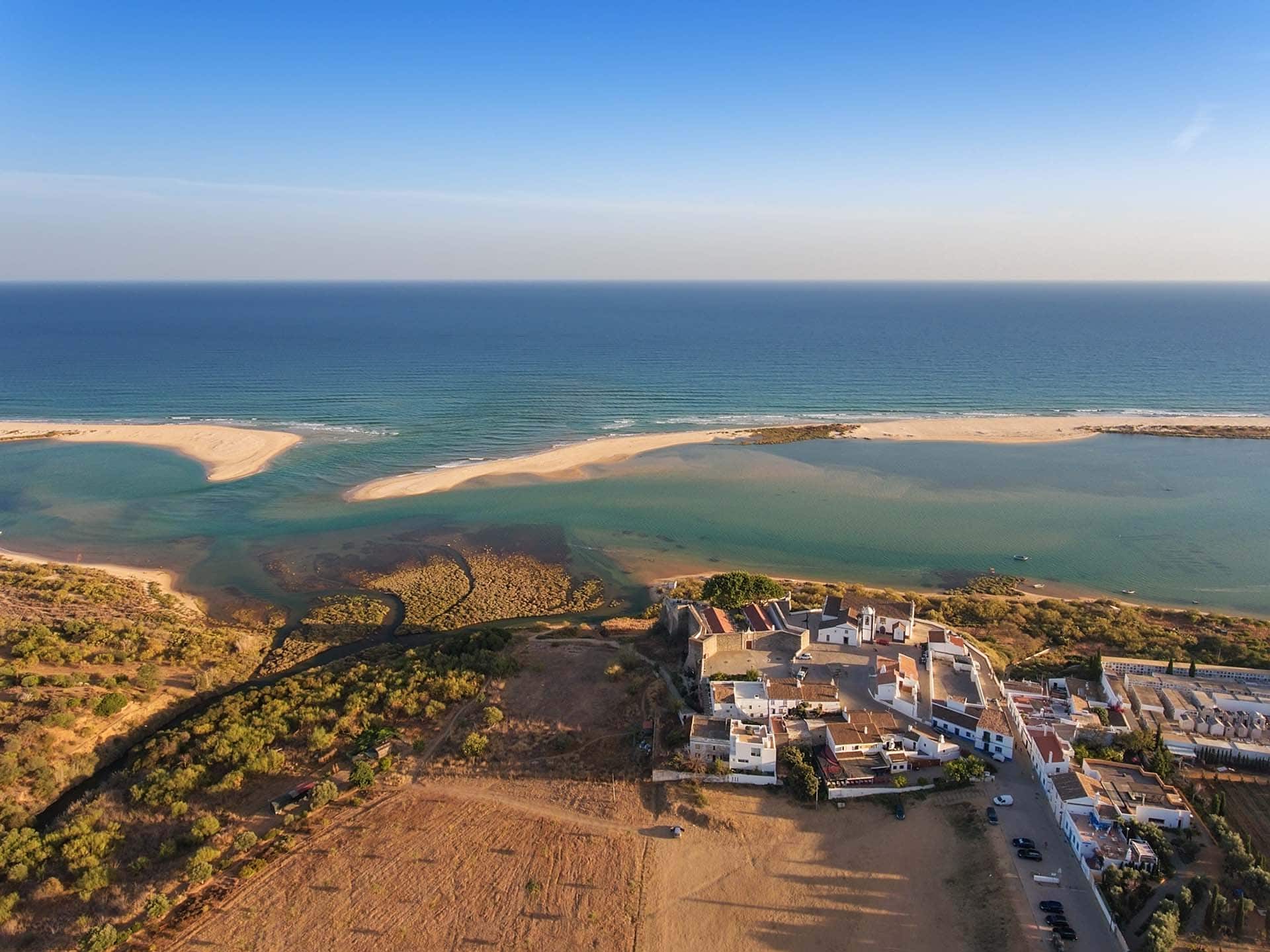
This protected area follows the Algarve coastline of the eastern Algarve, where a strip of barrier islands of approximately 50 km runs along the shore. It covers nearly 18,000 hectares of diverse habitats, which together form one of Europe’s most ecologically significant wetland regions.
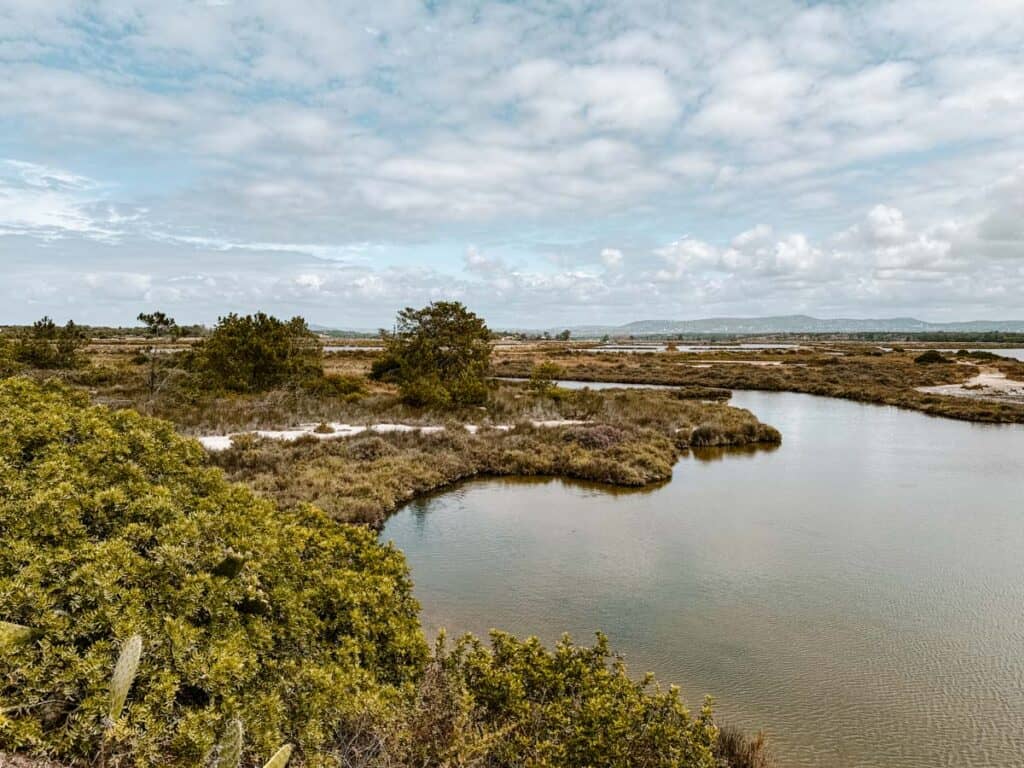
A diverse coastal landscape from Faro to Tavira
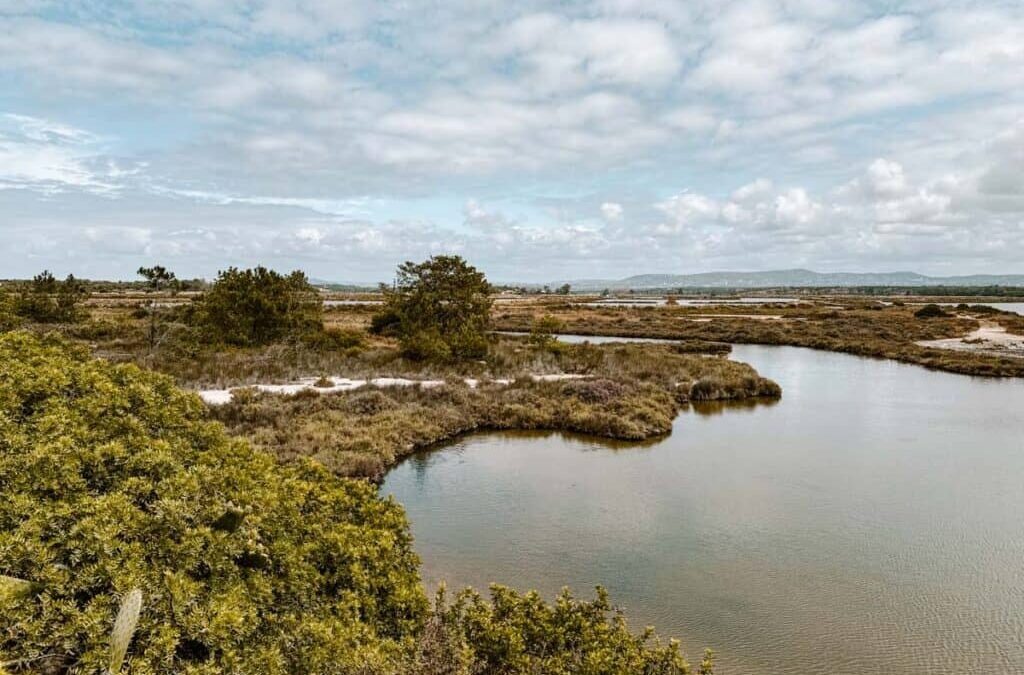
Often called the Ria Formosa National Park by visitors, the area brings together several distinct ecosystems: freshwater and brackish lagoons, pine forests, salt marshes and shifting dunes. Each habitat supports its own plants and animals. Together they form a layered environment that changes with the seasons.
From there, a network of barrier islands and waterways is cut through by channels that move throughout the year with the tides and currents. Even repeat visitors find the landscape slightly redrawn. Worth noting: the salt marshes and seagrass beds act as carbon sinks and help protect the communities further inland.
Remarkable biodiversity within the natural park
Recognised as a Wetland of International Importance, the Ria Formosa lagoon is home to more than 2,000 species of fauna and flora. These include many migratory birds, rare plants, crustaceans and fish. This range explains the area’s ecological value and its appeal for anyone drawn to nature.
The calm waters once held one of the world’s densest seahorse populations, though surveys have found major declines and fluctuations in both species. Along the sandy dunes, Mediterranean chameleons are sometimes spotted, while dolphins often appear offshore. Local fishermen were historically accompanied by Portuguese Water Dogs, a native breed.
Local plants add further interest to the walking trails. Sea lavender and bumblebee orchids bloom here and offer good photography opportunities throughout the year.
High environmental quality and conservation status
More than 90 per cent of the region’s bathing waters consistently meet the EU’s « excellent » standard, a sign of the region’s well-protected state. This quality supports both safety and enjoyment for those who swim here.
Research indicates that the park can accommodate visitors without harming its ecological balance. Current estimates put the threshold at up to 2,628 people a day, a limit designed to preserve both the environment and the visitor experience.
In contrast, climate change and habitat loss continue to threaten these delicate ecosystems. Casa Fuzeta advises staying on marked trails, choosing environmentally respectful tourism and supporting sustainable local initiatives.
Wildlife and birdwatching in the Ria Formosa
The Ria Formosa Natural Park is one of Europe’s recognised birdwatching destinations. Its varied ecosystems and seasonal migrations make it possible to observe rare and endangered birds throughout the year.
More than 200 bird species to discover
More than 200 bird species have been recorded in the park, including rare and endangered ones. This birdlife makes the lagoon a strong choice for birdwatchers and nature photographers.
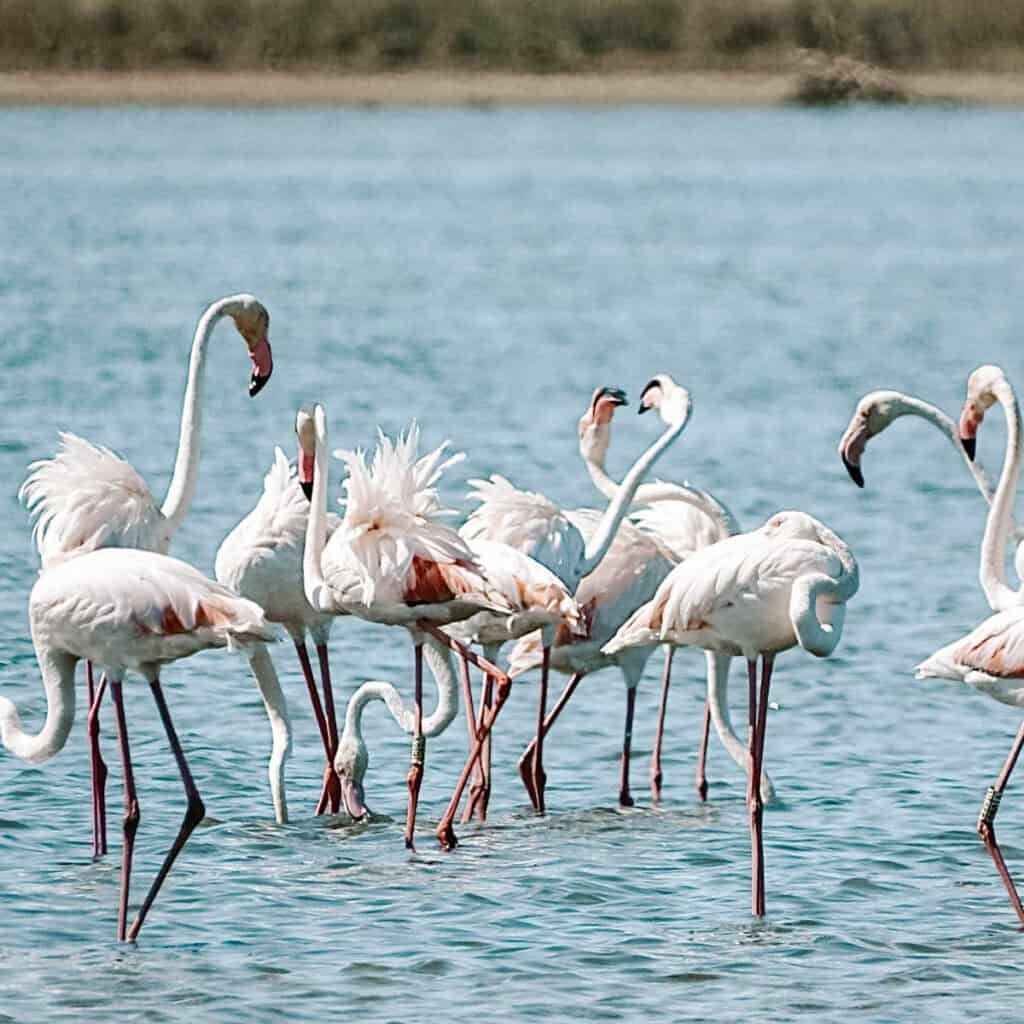
- Greater flamingos: visible all year, with numbers peaking between November and March, when they gather across the lagoon.
- White storks and little egrets: especially visible during the spring and summer breeding seasons.
- Spoonbills and avocets: best observed in spring and summer as they forage in the shallow waters.
- Purple swamphen (galinha-sultana): the park’s emblem, commonly sighted in the reed beds near the Quinta de Marim centre.
During the winter migration season, up to 20,000 waterfowl rest in the lagoon. Guided walks and boat tours also reveal habitats that are easy to overlook when exploring independently.
| Season | Best Bird Species | Conditions |
| Spring (Mar-May) | Breeding birds, spoonbills, avocets | Calm seas, moderate crowds, optimal for photography |
| Summer (Jun-Aug) | Terns, egrets, nesting colonies | Warm weather, popular beaches, frequent ferry services on some routes |
| Autumn (Sep-Nov) | Migratory flocks, flamingo numbers rising from November | Mild temperatures, excellent birdwatching, fewer crowds |
| Winter (Dec-Feb) | 20,000 waterfowl, peak flamingos, storks, ducks | Quietest season, check ferry schedules in advance |
Marine life and rare species worth seeing
Beyond the birds, the natural park contains marine ecosystems that support a wide range of wildlife. Near the beaches, chameleons blend into the dunes, while dolphins and nesting sea turtles occasionally appear offshore.
Early mornings, especially before 9 am, offer the softest light for photography and the best period for birdwatching. At that hour, the mix of water and sandbanks shows the area’s beauty at its clearest, whatever the season.
Activities and experiences in the Ria Formosa natural park
The park offers recreational activities for a wide range of interests and fitness levels. Visitors can choose quiet outings on the water or cultural days on the islands, each a different way into this coastal environment.
Kayak and boat tour options across the lagoon
The Ria Formosa Natural Park suits low-impact activities: swimming, kayaking or paddleboarding on calm water, and walking or cycling along the Ecovia trail. Paddling the narrow channels at sunrise, timed with the tides, offers a quiet perspective. Later in the day, a solar-powered boat tour is a relaxed alternative.
- Kayak Tour: family-friendly outings open to supervised children aged six and over, with close-up views of wildlife that the shore cannot offer.
- Sunset Boat Trips: pink, orange and peach skies cast an evening light across the water, a calm way to end a day spent exploring the lagoon.
- Guided Eco-Boat Trips: expert guides explain traditional salt-marsh production and long-standing agricultural practices along the coastline.
Casa Fuzeta recommends a Ria Formosa boat tour for visitors with limited time who want a concentrated introduction to the park. Independent explorers can follow self-guided cycling routes and walking trails such as the Ludo Trail, or go kayaking in Ria Formosa at their own pace, checking the tides first. Closer to the house, Praia da Fuseta is well suited to sailing and kayaking, and the guide to water sports and activities in the Algarve covers what lies beyond the lagoon.
Island hopping and cultural discoveries from Olhão to Tavira
The park’s car-free barrier islands are connected by ferry to traditional fishing villages. Culatra Island keeps its fishing traditions, Armona Island is known for its beaches, and Ilha da Barreta for its remote dunes. Each barrier island has its own character.
- Culatra Island: restaurants serve fish dishes and arroz de lingueirão (razor-clam rice) in a village shaped by its fishing life.
- Tavira Island: the Anchor Cemetery displays a collection of historic anchors, and a miniature train runs through the salt marshes to the beach.
- Ilha Deserta: minimal development and access only by ferry, for nature experiences away from the crowds.
On the mainland, guided walks in the historic town of Olhão reveal the region’s cultural heritage, including tidal mills and ancient Roman sites. A well-planned trip to Ria Formosa therefore combines time on the water with days of cultural discovery, from Olhão to the marshes near Tavira.
Best time to visit, and getting there from Faro
Casa Fuzeta recommends spring and autumn to most visitors. Spring brings wildflowers, calm seas and moderate visitor numbers, which makes it well suited to appreciating the natural landscape. In summer the beaches are popular and ferries run frequently on some routes, so early mornings help avoid the crowds.
Autumn brings mild temperatures and fewer visitors, and the water is still pleasant for a swim from an island beach. It is also a strong season for birdwatching, as flamingo numbers build towards their November–March peak. Casa Fuzeta recommends at least two full days to explore the trails and villages properly.
One day is enough for a basic tour, but a longer stay is more rewarding. The train links Fuseta to Faro and Olhão, which makes a car optional. Arranging where to stay near Ria Formosa before fixing travel dates makes the rest easier to plan. The village borders the wetlands, as the presentation of a restored villa in Fuseta explains, and a room close to the lagoon can be chosen from the selection of guest suites in Fuseta.
Frequently asked questions
Is Ria Formosa worth a visit?
Yes. A trip to visit Ria Formosa rewards travellers who value nature. The lagoon covers nearly 18,000 hectares and shelters more than 2,000 species of fauna and flora. It offers birdwatching with over 200 recorded bird species, as well as kayaking, solar-powered boat trips and car-free islands within the natural landscape of the Algarve.
What is the best season for experiencing Ria Formosa?
Spring and autumn suit most visitors to this nature reserve, with mild weather and fewer crowds. Flamingo numbers peak between November and March, while up to 20,000 waterfowl rest here in winter. Summer is popular for its beaches; visiting early in the morning helps avoid the crowds.
Does Faro have a beach, and how are the islands reached?
Faro Beach is an option near the city, and a wider choice lies across the lagoon. Ferries serve pedestrian-only beaches on the barrier islands, including Culatra, Armona and Ilha Deserta, which is reached only by ferry. From Fuseta, the train reaches Faro and Olhão, so no car is needed.