Table of Contents
- What is the Eastern Algarve, Portugal? Geography and towns
- Top Eastern Algarve towns to visit: Tavira, Olhão, Fuseta and beyond
- Things to do in Eastern Algarve, Portugal: beaches, trips and activities
- Eastern Algarve, Portugal: frequently asked questions about towns, beaches and trips
Discover an authentic coastal escape in the Eastern Algarve, Portugal: a region that offers discerning travellers, remote workers and investors a refreshing alternative to crowded resort areas. This trip guide takes in the area’s charming towns, unspoilt beaches and protected lagoons, making clear why this part of the Algarve has become such a considered choice for holidays and longer stays.
Located at the southernmost tip of mainland Portugal, the Eastern Algarve encompasses eight distinct municipalities and serves as the ideal destination to visit Tavira and neighbouring towns in this region of Portugal. The difference lies in the balance it keeps: historic villages, riverside and coastal towns rich in sights and activities, alongside protected natural landscapes, all within a region that still feels grounded in everyday life.
What is the Eastern Algarve, Portugal? Geography and towns
Officially designated Sotavento Algarvio, the Eastern Algarve forms the eastern half of Portugal’s southern coast. It extends from Olhão to the Spanish border and is framed by the Atlantic Ocean to the south and the scenic Guadiana River to the east.
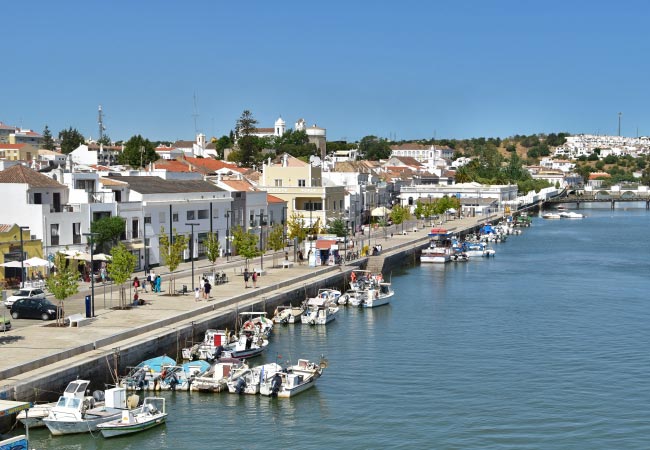
Eastern Algarve towns and geography: Sotavento Algarvio region
This stretch of coastline is shaped by eight municipalities, including Castro Marim, Faro, Olhão, Tavira and Vila Real de Santo António. Faro serves as the capital and largest urban centre, and it is also home to Faro Airport, the main gateway connecting the region to major European cities.
- Atlantic and river boundaries: The southern coastline faces the Atlantic, while the Guadiana River defines the eastern border with Spain, creating a subtle cultural meeting point. The Gilão River flows inland through this landscape, shaping the riverside character of towns along its course.
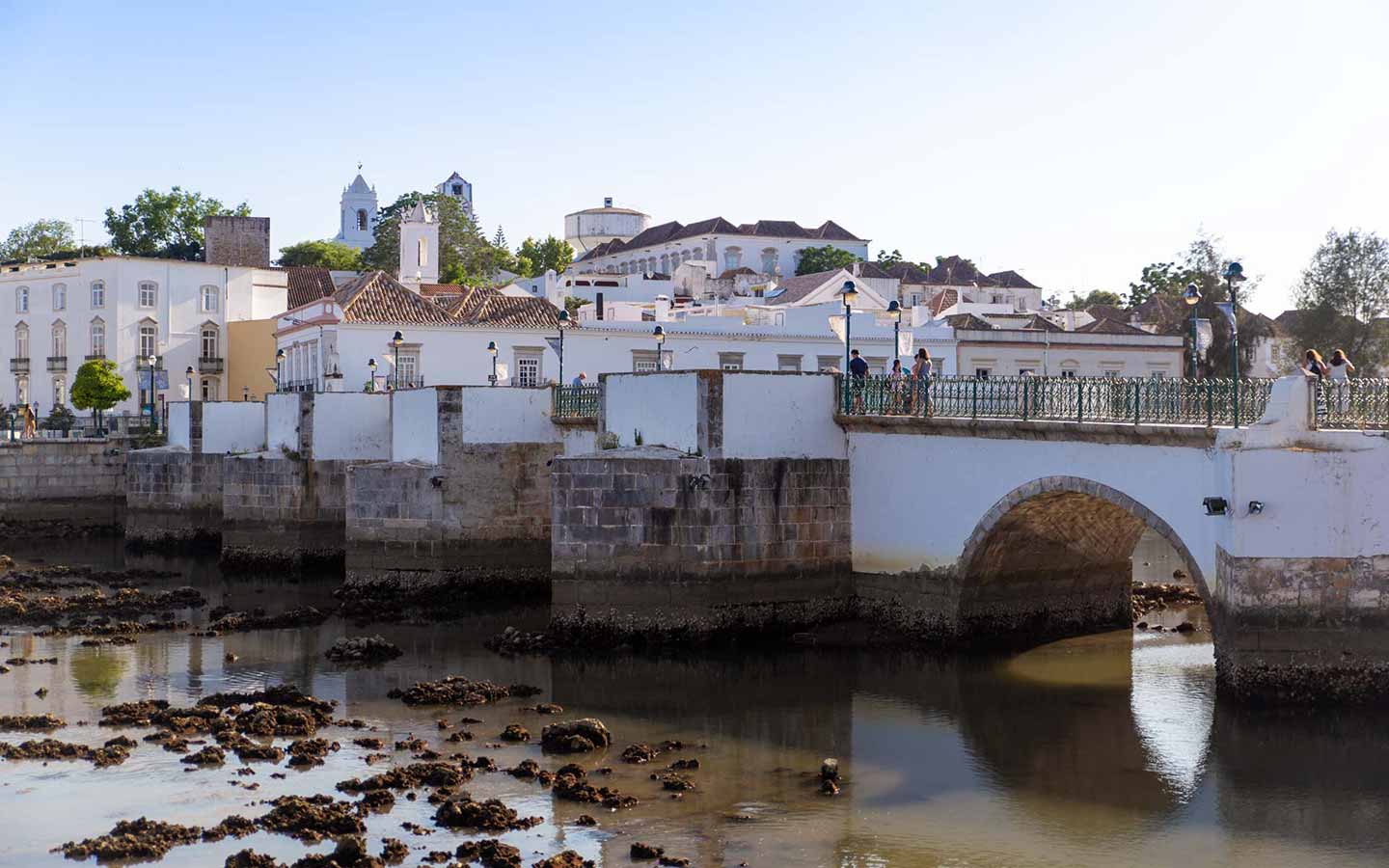
- Eight distinct municipalities: Each town in the Algarve has its own character: Roman history and the Roman bridge in Tavira, North African influences in Olhão, and the elegant grid plan of Vila Real de Santo António.
- Protected natural systems: The remarkable Ria Formosa Natural Park shapes much of the coastal landscape, with barrier islands and salt marshes vital for migratory birds. Local fish thrive in these waters, feeding the region’s culinary heritage.
- Access via Faro Airport: International flights arrive directly at Faro Airport, within easy reach of the main Eastern Algarve towns. Plan your Portugal trip or multi-day itinerary from here to discover Santa Luzia and beyond.
- .
From there, the region opens into serene lagoons, gentle hills and whitewashed settlements that still preserve a strong sense of place. In contrast to the more heavily developed western Algarve, the eastern coast keeps a quieter rhythm, with lighter tourism and a calmer atmosphere overall.
Best time to visit Eastern Algarve, Portugal: weather and trip planning
Sotavento Algarvio enjoys more than 300 days of sunshine each year, with hot, dry summers and notably mild winters. Worth noting for trip planning: the beach season often runs from mid-April to late October, making this a reliable part of the Algarve for swimming, walking and unhurried days by the coast.
Spring and early autumn are widely considered the best times to visit this part of the Algarve, combining warm temperatures with quieter beaches. These seasons suit unhurried days in historic towns and long lunches by the water. Winter offers a calmer alternative for exploration: daytime temperatures remain comfortable, though occasional rain is worth noting.
Eastern Algarve vs Western Algarve: what makes this Portugal region unique
While the Western Algarve is known for dramatic cliffs and busy resorts, the Eastern Algarve region is defined by tranquil coastal lagoons, protected landscapes, and picturesque fishing villages. The Eastern Algarve towns retain a close connection to their fishing heritage and to a local culture that still shapes daily life.
That sense of continuity extends beyond the shoreline. Property prices in this part of the Algarve, Portugal, are often more accessible, and the rhythm of life feels distinctly Portuguese rather than overly international: family-run restaurants, daily markets, and conversations that unfold at their own pace. The difference lies in the atmosphere, with a cultural depth far removed from the mass tourism found elsewhere.
Top Eastern Algarve towns to visit: Tavira, Olhão, Fuseta and beyond
The Eastern Algarve towns each carry a distinct character, shaped by architectural history and deep cultural roots. From the historic elegance of Tavira to the animated waterfront of Olhão and the quieter appeal of Fuseta, these places form the cultural heart of the Eastern Algarve region. Medieval castles, whitewashed streets, and excellent seafood markets all belong to the landscape here.
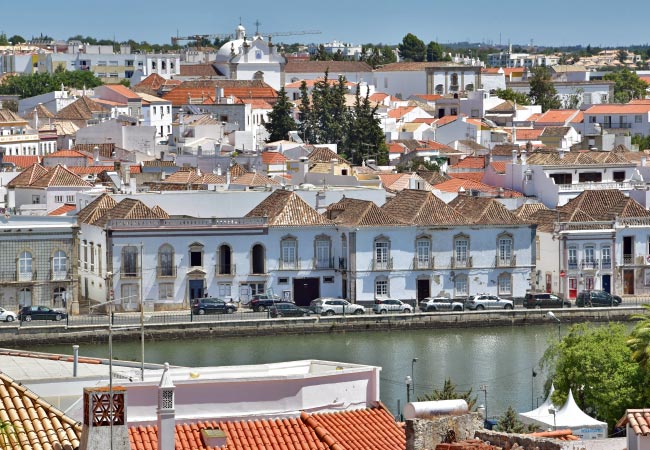
Tavira, Eastern Algarve: historic town with beaches and Ria Formosa views
Tavira is one of the most picturesque places in the Eastern Algarve. It is known for its Roman bridge, medieval castle ruins, and blue-and-white tiled buildings, all set within a townscape that feels composed rather than staged. The Igreja de Santiago reflects the area’s layered history, with traces of several eras visible in practice.
From there, winding cobbled streets lead through the historic centre past artisan shops and cafés serving thoughtful local cooking. The castle gardens open onto broad views of the Ria Formosa and the surrounding countryside: the kind of detail that makes Tavira linger in the memory. Ferries to Ilha de Tavira run throughout the year, linking the town to the island beaches of the Ria Formosa Nature Park.
Olhão, Vila Real, Castro Marim and other Eastern Algarve towns
Olhão offers a clear contrast, with flat-roofed terraces and North African-inspired architecture that speak to its maritime past. Two red-domed market halls anchor the waterfront, where local fishermen still bring in the day’s catch. Olhão’s market remains central to life here, and ferry services run daily to the car-free islands of the Ria Formosa lagoon.
- Vila Real de Santo António: The easternmost vila is defined by broad, elegant avenues and a promenade facing the Guadiana River. It sits directly on the Spanish border, giving the town a distinct sense of openness and exchange.
- Castro Marim: This hilltop town is home to a notable 14th-century castle. From there, the views extend across the salt flats and onwards into Spain.
- Monte Gordo: A well-known resort town in the east Algarve, it is valued for its broad sandy beach and lively promenade. The atmosphere remains easier and less compressed than in some of the region’s busier seaside centres.
From these eastern towns, the wider region opens out naturally. While Tavira, Algarve, Portugal remains an important cultural centre, Faro is equally rewarding: an Old Town enclosed by historic walls, with the Arco da Vila and a fine cathedral just minutes from the airport.
Excellent day trips connect these places with ease, whether by regional train or by car. In practice, this makes it simple to combine changing architectural styles with coastal scenery across a single stay, while each community maintains a clear commitment to generous hospitality and strong local cooking.
Hidden gem Eastern Algarve towns: Cacela, Alcoutim, Fuseta and island activities
Beyond the better-known stops, Cacela Velha offers a quieter kind of reward. This small clifftop village, reached by scenic paths from neighbouring towns, looks out over the Ria Formosa estuary from its reconstructed fortress: the kind of detail that lingers long after a day out has ended.
From there, a stay nearby brings the area into clearer focus. Choosing a luxury villa in Fuseta at Casa Fuzeta places this whitewashed village, the estuary, and the surrounding coastline within easy reach.
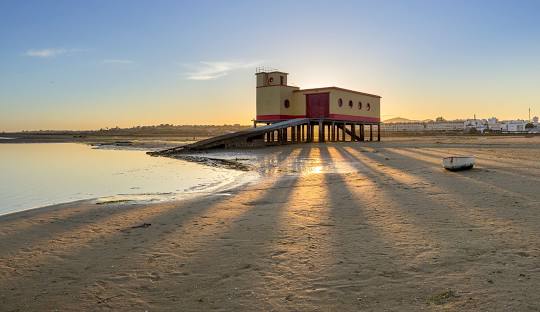
Further inland, Alcoutim sits quietly on the upper banks of the Guadiana River, with a graceful 13th-century castle overlooking the water. In contrast, the tranquil fishing village of Fuseta connects directly to neighbouring towns by train and to its island beach by ferry, making it a notably calm base in the eastern Algarve region.
Things to do in Eastern Algarve, Portugal: beaches, trips and activities
The best things to do in the Eastern Algarve include time on pristine beaches, discovering the islands of the Ria Formosa by kayak or ferry, and walking through cork forests and historic coastal villages. A week in Tavira or Fuseta reveals the region’s more authentic character. Whether the plan is for adventure or quiet, this part of the Algarve offers memorable experiences throughout the year.
Eastern Algarve beaches: Ilha de Tavira, Praia do Barril and island trips
Exploring exceptional shorelines, reached by ferry or car, makes an easy and rewarding day out. Ilha de Tavira stretches for 11 kilometres of golden sand, edged by clear Atlantic water. In contrast, Praia do Barril is known for a distinct local landmark: the Anchor Graveyard, a reminder of the area’s fishing past.
- Ilha de Tavira: This wide beach extends for 11 kilometres and is reached by a short ferry crossing from Tavira. It offers clear water and relatively light facilities, which helps preserve its calm atmosphere.
- Praia do Barril: Known for its Anchor Graveyard, this beach reflects the region’s historic tuna fishing tradition. Access is via a scenic boardwalk or a small train, the kind of detail that suits families particularly well.
- Cacela Velha beach: This more secluded stretch near Cacela is reached by descending from the village. At low tide, a striking sandbar appears, opening broad views across the Ria Formosa.
- Monte Gordo and Manta Rota: These beaches offer straightforward drive-up access and ample parking. Their broad, flat shorelines are especially practical for shorter visits and for travellers with mobility needs.
From there, island-hopping by ferry from Olhão and Fuseta opens up some of the Ria Formosa’s finest coastal spots. Many of the leading beaches in the Eastern Algarve hold Blue Flag status: worth noting for clean water and well-managed facilities.
| Beach Name | Access Method | Key Feature | Best For |
| Ilha de Tavira | 5-minute ferry from Tavira (€2–3) | 11 km of golden sand, Blue Flag status | Swimming, sunbathing, and a peaceful atmosphere |
| Praia do Barril | Historic miniature train through the dunes | Anchor Graveyard and 5 km of pristine sand | Families, cultural interest, and photography |
| Cacela Velha | Scenic cliff descent | A sandbar at low tide and wide Ria Formosa views | Those seeking quieter exploration |
| Monte Gordo | Direct car access with ample parking | A long, flat sandy beach with the casino nearby | Quick visits, families, and resort amenities |
Eastern Algarve activities: Ria Formosa lagoon, kayaking and bird-watching
The Ria Formosa stretches for roughly 60 km along the Eastern Algarve coast and remains one of Portugal’s most important protected lagoon systems. This shifting landscape of barrier islands, channels and mudflats supports migratory birdlife on a remarkable scale: guided outings regularly reveal flamingos, herons and seasonal visitors in the quieter reaches of the reserve.
From there, the water becomes the natural way to explore. Kayak excursions move through narrow lagoon channels for a close view of Ria Formosa nature, while paddle-boarding in the calmer shallows around a local ilha suits families and first-time visitors particularly well.
- Guided clam-digging excursions: Traditional hand-trowel harvesting on local mudflats, led by knowledgeable guides and carried out with respect for the protected ecosystem.
- Kayak and paddle-board tours: Small-group routes through serene channels and shallow lagoon areas, suitable for a wide range of fitness and swimming levels.
- Bird-watching expeditions: The Ria Formosa Nature Park draws numerous migratory species in peak seasons, with guides helping guests spot flamingos, herons and rarer birds from dedicated observation points.
- Boat island tours: Water taxis from Olhão, Fuseta and Tavira reach several car-free islands, opening onto wild stretches of sand and the kind of detail that makes this coastline feel quietly distinct.
Walking trails begin near the border in Alcoutim and cross a varied inland landscape. Along the coast, hikes from Altura to Vila Real de Santo António follow broad beaches and old fishing villages. In contrast, the Livramento route extends for around 16 km and opens onto wide views of the tidal flats.
Where to stay in Eastern Algarve, Portugal: Tavira, Fuseta and luxury options
That variety continues in the region’s places to stay. Accommodation ranges from carefully restored villas with rooftop pools to simpler guesthouses in historic towns. Tavira offers boutique hotels close to its Roman bridge and castle, while a stay in a well-placed villa in Fuseta brings a quieter rhythm and easy access to the beach.
From there, Casa Fuzeta stands out as a more considered base: a finely renovated Portuguese house dating from 1903, with four bedrooms and generous living spaces. Set in Fuseta on the Eastern Algarve coast, Casa Fuzeta places Tavira, the Ria Formosa lagoon and nearby beaches within easy reach by train or car. There is also a flexible dormitory for additional guests, along with a heated rooftop lap pool; the eastern Algarve beaches guide from this luxury beachfront villa explains how to reach clear lagoon waters and long stretches of sand.
Beyond the setting, the house is shaped for longer, more comfortable stays. Eco-conscious features, including solar-powered water heating, sit naturally alongside a contemporary interior. High-speed Wi-Fi, dedicated workspaces, daily housekeeping, security cameras and terraces facing the lagoon add the kind of detail that matters in practice.
That same sense of ease carries into the location: the local train station is around five minutes away on foot. Connections to Faro, Olhão and Tavira are straightforward, making a car optional rather than essential. For travellers intending to explore the wider Eastern Algarve region, Casa Fuzeta offers a base that is both calm and well connected.
Eastern Algarve, Portugal: frequently asked questions about towns, beaches and trips
What towns should be visited in the Eastern Algarve, Portugal?
The eastern Algarve comprises eight municipalities: Alcoutim, Castro Marim, Loulé, São Brás de Alportel, Faro, Olhão, Tavira and Vila Real de Santo António. Each brings a distinct character, from maritime traditions to baroque churches and everyday Portuguese life.
From there, choice depends on the kind of stay being considered. Tavira is known for its Roman bridge, tiled façades and calm rhythm; Olhão for cubist architecture and its lively seafood market. Castro Marim carries a strong historical atmosphere, while Faro offers a notable medieval centre: the kind of detail that gives the region depth beyond its shoreline.
Is the Eastern Algarve worth visiting?
For travellers seeking a more grounded side of the Algarve, the answer is yes. The eastern Algarve combines wide beaches, protected landscapes, strong local food culture and a pace that feels less hurried than in the west.
That balance also makes logistics straightforward. With roughly 300 days of sunshine each year, reliable regional train links and close access to Faro Airport, many of the area’s most appealing towns are within about 25 minutes of the terminal; in practice, that means less time in transit and more time by the water or in the old streets.
What is the best time to visit Eastern Algarve, Portugal, for beaches and activities?
Spring and early autumn are often the most balanced times to visit. Days are warm and bright, the beaches are quieter, and conditions suit walking, birdwatching and time outdoors without the full intensity of midsummer.
As soon as summer arrives, sea temperatures rise and beach days become especially appealing. Crowds increase as well, and daytime temperatures regularly exceed 30°C, so longer excursions are best planned for the morning or later afternoon. Winter, in contrast, stays relatively mild and peaceful, though occasional rain is more likely.
The main swimming season usually runs from mid-April to late October. For many discerning travellers, the difference lies in the shoulder seasons: lower rates, quieter sands and easier access to markets, villages and the Ria Formosa’s birdlife.