Table of Contents
- Best hotels, villas and guest houses in Ria Formosa Natural Park
- Prime locations within Ria Formosa Natural Park for nature lovers
- Activities and experiences from your hotel base
- Choosing your perfect park accommodation style
- Frequently asked questions
Planning a trip to Portugal’s remarkable Ria Formosa Natural Park and its protected wetland landscape? The choice of accommodation shapes the stay in practice: this nature park along the eastern Algarve offers barrier islands, abundant birdlife, and working fishing villages, each best enjoyed from the right base. From polished resorts with spa facilities to boutique guest houses in central Faro, or a well-placed guest house with wide lagoon and garden views of the natural beauty, there is a setting to suit different ways of travelling.
That choice also affects how easily each day unfolds. Knowing where to stay near the Ria Formosa helps travellers select a privileged location that spends less time in transit and more time on the water, on the islands, or along the park’s walking trails, with comfort and calm built into the return.
Best hotels, villas and guest houses in Ria Formosa Natural Park
Across the Ria Formosa nature reserve, the accommodation landscape runs from refined beachfront resorts like Ria Park Garden Hotel to smaller coastal hideaways and formosa guest houses. Some travellers prefer complete immersion in nature; others value the cultural life of Faro or Olhão, while families may look first at space, pools, and practical layouts. The difference lies in finding a place that balances character, comfort, and access to the shoreline—whether through a park garden hotel setting or a more intimate property like Casa Fuzeta.
Luxury hotel options near Ria Formosa Park and the nature reserve
The Formosa Park Apartment Hotel offers four-star comfort at the edge of the reserve, with private terraces, kitchenettes, and open sea views. Staff can arrange lagoon kayak outings or early birdwatching excursions, and for families considering where to stay in Algarve with baby, the short walk to Ancão Beach is worth noting: calm water and soft sand make the setting particularly easy.
- Penina Hotel & Golf Resort: A longstanding Algarve address with an 18-hole championship course, a full-service spa, several dining options, and family-friendly rooms.
- Dona Filipa Hotel: An elegant casa-style property overlooking the lagoon, with an outdoor pool, well-regarded Algarve cuisine, and quiet garden spaces.
- Real Marina Hotel: In Olhão’s contemporary marina district, this hotel includes a rooftop pool with views over the fishing boats and direct ferry access to the islands.
From there, the strongest luxury options share a similar advantage: staff with local knowledge and a setting that simplifies the region. Oyster farm visits, sunset catamaran trips, and guided walks through the park can all be arranged with little friction, which is the kind of detail that changes the pace of a stay.
Boutique hotels in Faro and Ria Formosa’s historic centre
Hotel Balzac, set within a carefully restored townhouse in Faro’s centre, pairs artisanal furnishings with bright rooms and a rooftop terrace overlooking the lagoon. Couples exploring where to stay in the Algarve for couples may find the appeal as soon as they arrive: local wine at dusk, with the light softening over the water, remains rare in this stretch of coastline.
Tremoille Hotel, near the park’s western entrance, specialises in personalised nature experiences. After early birdwatching walks, guests can settle into the courtyard garden or pause for tapas in the intimate bar: a quieter rhythm, once you arrive. The staff can also arrange private boat trips to the islands or gentle cycling routes along the coast.
That ease of access continues across both boutique addresses. Each sits within walking or cycling distance of the reserve’s boardwalks, making it simple to spot flamingos, explore the salt pans, and still return to a quiet room in good time for dinner.
Coastal village accommodations for families
Cabanas de Tavira offers riverside guesthouses and compact hotels just steps from the promenade, giving families quick ferry access to the sandy beaches. Owners often share thoughtful local recommendations: picnic spots, island trails, and the safest swimming areas for children.
From there, Fuzeta brings a slightly more residential feel. In Olhão’s Fuzeta village, properties such as Casa Fuzeta offer a carefully restored 1903 house with four double en-suite bedrooms, a children’s dormitory, and a rooftop pool overlooking the Ria Formosa Natural Park; the difference lies in how well the layout suits mixed-age stays. A shaded patio and open-air dining area complete the setting for multi-generational time together.
Private villas and resort accommodations for couples and groups
Casa Fuzeta also stands out as an architect-designed villa with a more contemporary expression. Floor-to-ceiling windows, a private pool, and sunrise views across the Ria Formosa set the tone, while multiple en-suite bedrooms provide privacy for groups and generous shared spaces keep the stay sociable.
Beyond Fuzeta, the eastern Algarve offers villas near Cacela Velha and Vale do Lobo with full kitchens, climate control, and landscaped gardens. Some favour a clifftop setting with a hot tub, others a beachfront apartment near a quiet marina: in practice, these self-contained properties suit couples, families, and groups looking for freedom without losing comfort.
Prime locations within Ria Formosa Natural Park for nature lovers
Where a traveller stays in Ria Formosa Natural Park shapes the entire rhythm of the holiday. A beachfront room on Praia de Faro brings sand and sea within a few steps, while a countryside casa set among gentle hills offers valley views, birdsong at first light, and easy access to gardens and marshland trails.
Faro city centre versus coastal villages
That contrast becomes especially clear when comparing Faro with the eastern villages. Faro’s historic centre brings cultural landmarks, a lively marina, and efficient transport links to the park’s barrier islands, while places such as Fuzeta or Olhão offer a more grounded coastal atmosphere: calm beaches, family-run seafood restaurants, and the measured pace of everyday local life. For those weighing the eastern or western Algarve, the difference lies in how each setting frames the days.
- Faro advantages: International airport access, notable architecture, varied dining, and swift ferry crossings to the islands of the Ria Formosa.
- Village character: Preserved local culture, quieter beaches, and direct access to nature trails through the park, well suited to early walks or bicycle rides.
- Getting around: Faro offers car hire and rail connections, while villages such as Fuzeta have smaller train stations and easy waterfront routes on foot.
- Local encounters: Fish markets and family-owned tavernas where residents still outnumber visitors, allowing for a more natural sense of place.
From there, the choice becomes one of tempo. Faro’s rooftop apartments often look across the water in broad, open views, while village casas sit near working docks where the day’s catch arrives by late morning; worth noting, this quieter proximity to daily life is the kind of detail that gives a stay its lasting texture.
| Location type | Best for | Key features | Distance to nature |
| Faro city centre | Culture-focused stays, shorter visits | Museums, restaurants, evening atmosphere | About 10 minutes by ferry to the islands |
| Coastal villages | Nature-led stays, families | Beaches, trails, everyday local life | Immediate access to the park |
| Rural properties | Couples, restorative retreats | Privacy, gardens, birdwatching | Within or close to reserve boundaries |
Eastern Algarve advantages in Ria Park for authentic stays
The Eastern Algarve, especially around Tavira, Olhão, and Fuseta, offers an unspoilt coastline shaped by sandbank islands reached by a short boat ride. Many places to stay sit close to the Ria Formosa, with lagoon views and Faro Airport around 25 minutes away. Casa Fuzeta brings together ease of access and a setting defined by water, light, and open horizon.
That sense of place continues in the villages themselves: octopus drying on racks in the sun, fish markets animated by the morning catch, and low-rise architecture that sits quietly within the landscape. The difference lies in how the region has held on to its fishing character whilst protecting the wetlands and long views that define Ria Formosa Natural Park.
Eco-lodges and nature-focused guest houses in Ria Formosa
From there, accommodation around the park often leans towards a closer relationship with the environment. Eco-lodges along its edges organise migratory bird walks in spring and autumn, while farm stays open a window onto oyster cultivation and salt harvesting. In practice, sustainable tourism here is not presented as a gesture but as part of daily life.
- Nature tours: Sunrise walks with bird specialists to observe flamingos, spoonbills, and purple herons.
- Eco-friendly features: Solar energy, water-saving systems, organic gardens, and partnerships with conservation groups.
- Learning opportunities: Sessions on salt-marsh ecosystems, traditional fishing methods, and the park’s role in migratory routes.
- Private access: Carefully managed trails through barrier islands and marshland, designed to reduce impact while deepening the experience.
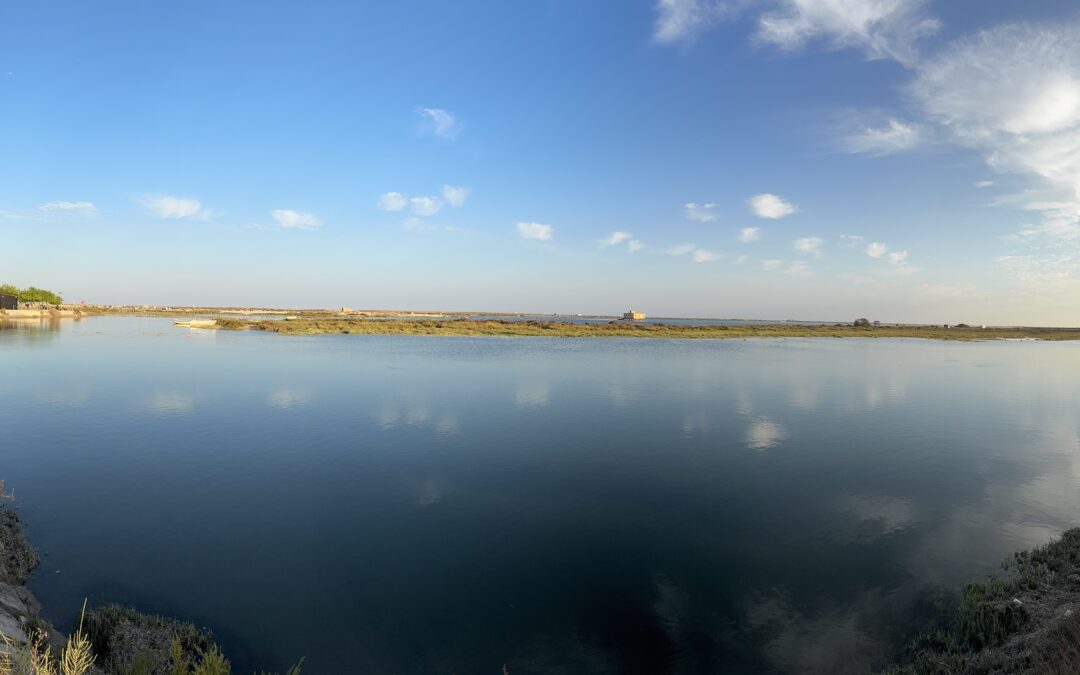
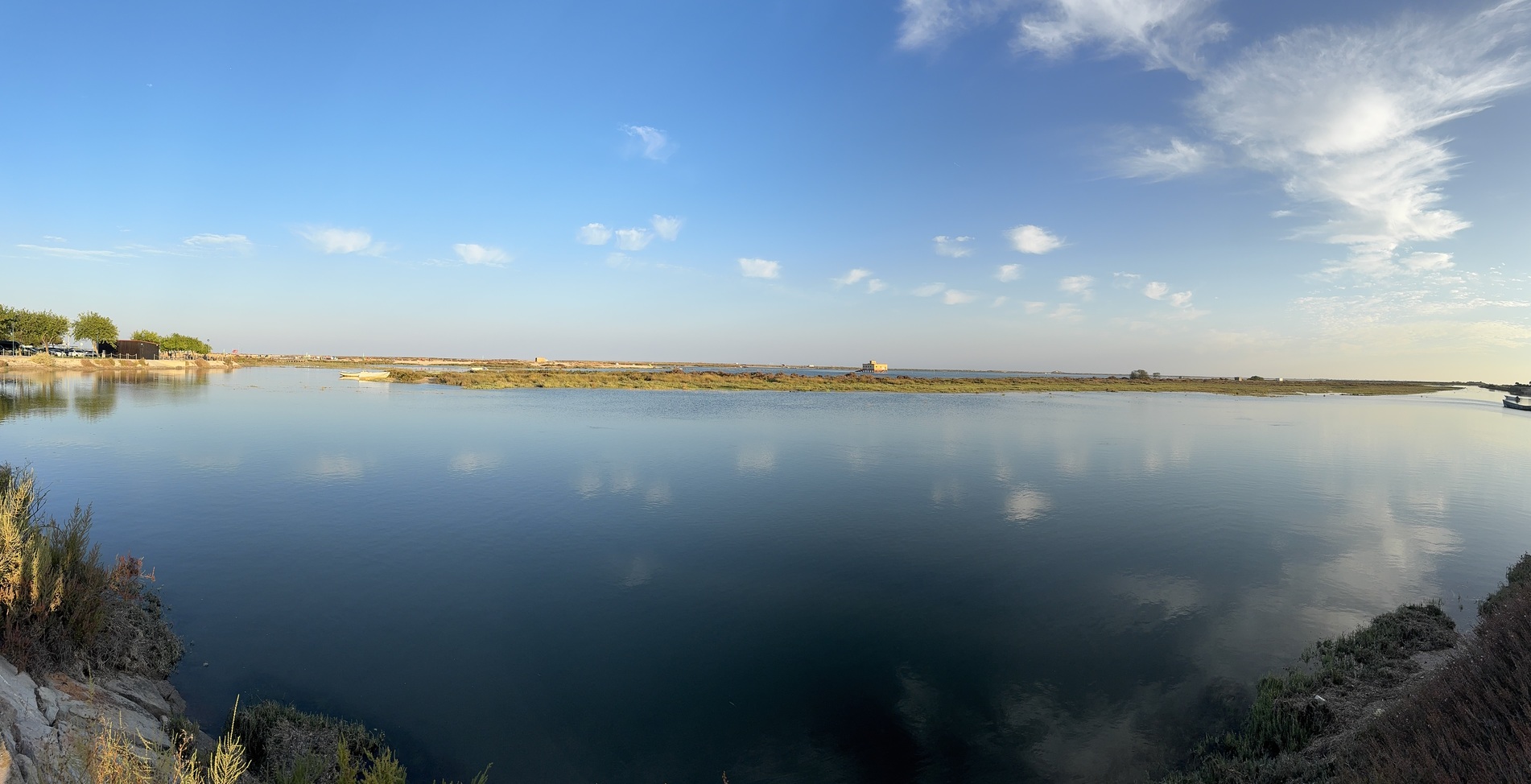
Beyond the threshold, some boutique hotels near the Faro–Olhão inlet provide telescopes for watching flamingos feed in the shallows at dawn. The scene is quietly precise: pale water, long reflections, and movement only where the birds disturb the surface.
Waterfront properties with lagoon views
That attentiveness to setting becomes even clearer in waterfront stays. Homes on Praia de Faro offer direct access to seven kilometres of protected shoreline, while lagoon-facing terraces look across tidal channels where traditional boats still pass at an unhurried pace. Hillside villas extend the view further, over gardens, wetlands, and the Atlantic beyond.
Casa Fuzeta is defined by this kind of placement: a sunlit terrace aligned with migratory bird routes, and a rooftop pool that seems to meet the horizon. Once you arrive, the kind of detail that stays in mind is not only the comfort, but the calm relationship between architecture and landscape.
Activities and experiences from your hotel base
The choice of a coastal base shapes every encounter with the delicate ecosystem of the Ria Formosa. For those seeking absolute stillness, the ideal retreat acts as a quiet conduit to the surrounding salt marshes and barrier islands. Casa Fuzeta positions its guests at the very threshold of this protected landscape, balancing refined indoor comfort with immediate access to the water. The difference lies in how one approaches these tidal waters: a morning can begin with a silent boat departure or a slow stroll along the shoreline.

Golf resorts with access to Ria Park nature trails
Further along the coast, manicured fairways meet the wild salt pans of the nature reserve. Prestigious courses like San Lorenzo weave directly through the wetlands, offering players a singular vantage point over the migratory bird routes. Beyond the greens, these dedicated estates provide a structured contrast to the untouched wilderness nearby: private wellness spaces, clay courts, and manicured gardens.
From there, the transition from active sport to quiet contemplation is seamless. Dedicated pathways lead directly from the lawns down to the edge of the lagoon, where the calls of herons replace the quiet click of golf balls. It is worth noting that these properties offer a highly structured way to experience the Algarve, serving those who appreciate a predictable rhythm to their days. The afternoon concludes with a familiar ritual: a cool swim in a secluded pool followed by a dinner of freshly caught sea bass.
Island camping and unique beach stays
In contrast to the structured mainland estates, the barrier islands offer an altogether different tempo. Accessing these narrow strips of sand requires a brief ferry or private water taxi crossing from the historic docks of Olhão or Faro. Once you arrive, the modern world recedes in favour of sand tracks, wooden boardwalks, and Atlantic breezes.
- Armona Island: Slow-paced beach houses stand near the jetty, offering immediate access to quiet shores and simple family-run tavernas serving grilled sardines.
- Barreta Island: Known locally as Deserta, this uninhabited stretch features a single eco-conscious restaurant and vast, empty sands reachable only by scheduled boat.
- Culatra Island: A working fishing community where traditional life continues alongside simple, low-lying cottages that sit directly on the sand.
Life on these outer islands is dictated entirely by the movement of the tides. Wooden beach huts at Barril Beach overlook some of the clearest waters in the region, while simple campsites on Tavira Island provide shelter beneath parasol pines. The lack of vehicles creates a rare quiet: the gentle wash of the ocean becomes the primary soundtrack to the evening.
Water sports and boat tours from villages
The traditional fishing ports of Fuseta, Olhão, and Cabanas de Tavira serve as natural gateways to the inner lagoon. Kayaks and paddleboards allow for a silent, non-intrusive exploration of the shallow channels: a silent glide past salt pans where nesting pink flamingos feed undisturbed. As afternoon slowly fades into dusk, local skippers guide wooden boats through the winding waterways, serving chilled white wine from the region as the sun slips below the horizon.
Traditional wooden boats transport small parties to secluded sandbars accessible only by water, with departures carefully timed to the shifting tides. Younger companions can safely paddle in the shallow lagoons while adults rest on the undisturbed sand. Many local skippers provide classic snorkelling equipment: simple masks and fins to discover the seahorses and marine life navigating the eelgrass.
Bird-watching and hiking from your accommodation
Selecting a base along the coastal pathways places the park’s diverse wildlife habitats within immediate reach. A quiet morning walk from the gates of Casa Fuzeta often reveals a striking spectacle: pink flamingos wading through the salt pans to feed in the early light. From there, cyclists can follow the level trails that wind past tranquil bird hides and sleepy fishing harbours.
Afternoon brings a slower pace, best spent resting in the shade before the tides shift once more. Once you arrive, the rhythm of the lagoon dictates the day: high water invites swimming, whilst low tide exposes the labyrinth of sandbanks. Every hour offers a quiet shift in perspective over the water.
Choosing your perfect park accommodation style
The nature of your accommodation shapes how you experience this protected coastline. An apartment within a resort framework offers a familiar ease with communal facilities and scheduled services. In contrast, a private villa offers an intimate sanctuary where the daily schedule remains entirely your own.
Ria Park garden hotel apartments versus private luxury villas
Properties like the Formosa Park Apartment Hotel combine self-catering utility with resort amenities, making them practical for families seeking routine convenience. These environments provide structured activities and shared pools, which suit shorter stays or those wishing to delegate daily planning. When deciding where to stay overnight in Ria Formosa, the difference lies in the level of personal space you require.
While apartment hotels provide structured social spaces and reception assistance, they lack the quiet insularity of a dedicated residence. A private villa accommodates larger families or groups under one roof, offering a shared domestic flow that hotels cannot replicate. The economy of a villa also becomes apparent with longer stays, where the cost of multiple hotel suites is replaced by a single, expansive home.
Thoughtfully designed properties such as Casa Fuzeta offer generous bedrooms with private en-suite bathrooms and expansive glass doors. These openings frame the horizon: terraces look out over the tiled rooftops to the salt marshes beyond. Modern amenities like silent climate control and high-speed connectivity are integrated seamlessly alongside handmade terracotta tiles and local textiles.
Benefits of private pools and panoramic views at Ria Formosa villas
A private pool provides an undisturbed sanctuary to cool off during the heat of the afternoon. From the elevated terraces of a villa, the panoramic views of the Ria Formosa unfold in silence: a tapestry of channels, sandbanks, and deep blue water. Here, the transition from day to evening is observed without distraction, accompanied only by the distant call of coastal birds.
A private pool removes the compromise of shared spaces and allows for unhurried swims at any hour, well suited to the Algarve’s mild climate. For travellers drawn to the birdlife of the Ria Formosa flamingos, a well-positioned terrace brings the lagoon into view at its quietest moments: early light, still water, and movement across the salt flats. Together, these elements turn time at home into something more memorable than simple rest.
- Complete privacy: Swim, sunbathe, and dine in seclusion, ideal for family time or a quieter stay for two.
- Child-friendly: Parents can keep children in easy sight from nearby seating, with many villas designed for straightforward supervision.
- True luxury: A private pool offers a sense of independence and ease that large resorts rarely provide.
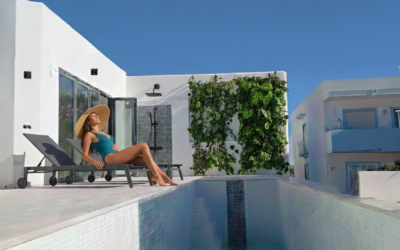
That sense of privacy continues on the roof. Casa Fuzeta’s lap pool gives the impression of floating above the lagoon, while meeting the expected safety standards; the adjacent terrace is particularly rewarding at day’s end, when the light softens and the horizon remains clear well into the evening.
From there, the terraces support the rhythm of a full day outdoors. Shaded areas make space for morning coffee, slower lunches, and dinner after sunset: the kind of detail that allows indoor and outdoor living to feel naturally connected rather than staged.
Architectural design and natural beauty in Ria Formosa accommodations
That connection between setting and daily life carries through to the interiors. Villas such as Casa Fuzeta combine Portuguese character with a cleaner contemporary line, using natural light and open views to keep the lagoon present throughout the house.
Beyond the threshold, local craftsmanship gives warmth and specificity to each room: hand-painted tiles, woven textiles, and a palette that draws quietly from sea and sand. The difference lies in restraint, with decorative choices that feel rooted in place rather than applied for effect.
Open-plan layouts make shared time easy, while still giving clear purpose to spaces for cooking, dining, and unwinding. Bedrooms are arranged for comfort with quality bedding, blackout curtains, and practical work areas, and integrated systems for lighting, temperature, and security sit discreetly within the design.
Overnight stays for flamingo watching in Ria Formosa
As soon as location becomes part of the stay, access to the lagoon takes on a different quality. Properties close to the main observation areas allow early starts before public activity gathers, when flamingos move across the water in softer light and the marshes are at their calmest.
In practice, Casa Fuzeta can arrange private early-morning boat outings that offer a quieter approach than standard group excursions. Expert guidance adds context on the birdlife and the protected landscape, without disturbing the sense of stillness that makes these hours so distinctive.
Later in the day, the terraces offer a second vantage point. Evening meals can unfold against returning flocks and long reflections on the water, and binoculars or field guides help turn a passing sighting into a closer understanding of spoonbills, avocets, and other species found in the reserve.
Frequently asked questions
What makes Quinta do Lago and Ria Park hotels special for nature stays?
The Quinta do Lago area stands out for its direct connection to the Ria Formosa Natural Park. Guests have easy access to lagoons, dunes, and the protected islands just offshore: a landscape that shifts gently between resort polish and open, undeveloped shoreline.
From there, the appeal becomes clearer. This well-regarded Ria Park hotel setting brings together established golf courses, refined hotels, and more intimate casa-style stays, often with spas and generous pool areas; the difference lies in how quickly a day by the water can turn into an afternoon on a boardwalk, a boat crossing, or a quiet stretch of beach.
How do I choose between staying in Faro or coastal villages?
That balance between convenience and atmosphere matters here as well. Faro, as the Algarve’s capital, offers practical advantages: hotel choices near the airport, museums, shops, and a livelier evening scene.
In contrast, smaller fishing villages such as Santa Luzia place the park closer to daily life. Ferries, seafood restaurants, and the rhythm of the waterfront sit within easy reach, often in family-run settings that feel rooted rather than staged; worth noting if the stay is meant to begin with the beach rather than the city.
Are private villas with pools worth the investment for families?
For families, private villas with pools can represent strong value in practice. Properties such as Casa Fuzeta are chosen for features that matter over several days: enclosed pools, more than one bathroom, and outdoor dining areas that make unhurried meals simpler with children in tow.
Beyond the threshold, space changes the experience. Close access to the beach and sea allows children to explore more freely, while adults have room to slow the pace; when costs are shared across relatives or friends, these villas can compare favourably with booking several hotel Quinta do Lago rooms, while offering a more independent way to experience Ria Formosa.