Table of Contents
- Getting to Fuseta Beach: Access, Transport & Parking
- Fuseta Beach Features: Blue Flag Safety, Sand Amenities & Lifeguards
- Fuseta Beach Activities: Water Sports, Kayaking & Nature Adventures in Ria Formosa
- Island Excursions: Ferries to Ilha da Fuseta & Ilha da Armona from Fuseta Beach
- Fuseta Village Amenities: Authentic Fishing Village, Markets & Local Attractions
- Where to Stay in Fuzeta: Refined Lodgings and Coastal Villas
- Planning Your Fuseta Beach Trip: Best Times, Packing & Local Guide
- Fuseta Beach FAQs: Is It Worth Visiting? What Activities Are Available, and How Do You Access the Islands?
Experience a rare combination of calm lagoon bathing, golden sand, and the everyday character of the fishing village of Fuseta, a charming town of Fuseta set within the protected Ria Formosa Natural Park in Portugal. This guide to Fuseta covers the beach area and nearby beaches, including access from Olhão, offering practical essentials for a family holiday or grounded Algarve stay: transport, ferry access, island visits, and considered accommodation options.
Getting to Fuseta Beach: Access, Transport & Parking
Reaching this part of the eastern Algarve is straightforward, with several options depending on pace and preference. Fuseta lies around 25 kilometres east of Faro Airport, and the drive usually takes 25 to 30 minutes via the A22.
How to Reach Fuseta Beach: Train, Ferry, Car & Harbour Access
The regional train from Faro takes about 35 minutes and arrives at Fuseta-A station, around 300 metres from the beach promenade. The walk is flat and uncomplicated, the kind of detail that matters when travelling with children or carrying a day’s worth of beach gear. Public buses also connect Fuseta, Portugal‘s charming coastal location, with Olhão, Tavira, and Faro, so exploring without a car remains entirely workable.
From there, summer ferries run from the mainland harbour to Ilha da Fuseta and Ilha da Armona at frequent intervals. The crossing takes roughly 10 minutes across the ria, with return tickets typically costing around €2 and available at the pier. These islands offer pristine beaches and praias ideal for a day’s escape.
- By car: Follow signs to the village of Fuseta; during peak season, arriving before 10.00 am is advisable, as parking near the harbour fills quickly.
- By train: The 35-minute journey from Faro is scenic and direct, with the station a short walk from the sand.
- By ferry: Frequent summer ferries offer easy access to the barrier islands for a day of unhurried swimming.
- By bike: The traffic-free Ecovia Litoral cycle path passes through pine woodland and orange groves before reaching the coast.
For travellers who prefer a seamless arrival, Casa Fuzeta can arrange private airport transfers and chauffeur services directly to the accommodation. Ride-share services such as Uber are also available locally, particularly for journeys to nearby towns and resorts.
Fuseta Beach Location: Golden Sand Praia by Ria Formosa Natural Park
Praia da Fuseta-Ria is around a five-minute walk from the town centre, main square, and marina. This Blue Flag beach follows the sheltered edge of the ria, with fine golden sand and shallow water protected by the channels and islands of the Ria Formosa Natural Park.
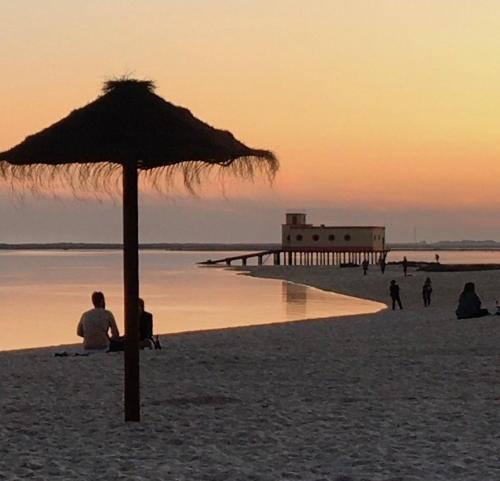
Beyond the threshold of the promenade, one landmark stands out: the historic wooden lifeguard tower, often partly encircled by water at high tide. Its east-facing position makes sunrise especially striking, while low tide reveals wide sand banks suited to paddling and sandcastle building.
For a fuller overview of activities and family-friendly features, see the Fuseta beach guide.
Fuseta Beach Features: Blue Flag Safety, Sand Amenities & Lifeguards
Fuseta Beach holds Blue Flag status, a recognised marker of strong water quality and careful environmental management. This praia’s sheltered lagoon creates a notably calm swimming area, and lifeguards are on duty daily from 10:00 to 18:00 between June and September.
Safety and Amenities
That sense of ease continues on the sand. Lifeguards use a clear flag system: green indicates that it is safe to swim, yellow advises caution, and red signals dangerous conditions or currents.
From there, the practical details are well covered: clean toilets, outdoor showers, and fully accessible changing rooms. Sunbeds and parasols are also available to rent, the kind of detail that makes a full day by the water feel more comfortable.
During peak season, beachside spots such as Borda d’Água serve light meals and cold drinks, while the promenade is lined with ice cream stands. In contrast, shaded picnic areas with barbecue grills offer a more relaxed option, particularly for anyone planning lunch around fresh fish from the local market.
Important safety advisory: Never attempt to walk across the exposed sand to reach the islands, even at low tide. The currents can be dangerous and have left visitors stranded in the past, so the ferry remains the safe and reliable route.
Best Times to Visit Fuseta Beach: Tide Tables, Water Temperature & Seasons
That emphasis on safety suits the water conditions too. The lagoon is shallow and calm, with pleasantly warm water that works especially well for families, beginner paddleboarding, or an unhurried kayak outing.
Because the sea here remains consistently gentle, it is particularly well suited to young children and anyone learning to swim. The difference lies in the shelter provided by the lagoon, which keeps conditions more forgiving than on the open coast.
Before setting out, it is worth checking the tide tables. At low tide, broad stretches of sand appear for beach games and exploring natural rock pools; at high tide, warmer water reaches closer to shore.
Beyond the summer peak, spring and early autumn often offer the most comfortable balance: temperatures tend to sit around 20–25°C, and the shoreline feels noticeably less crowded. For a quieter visit still, weekday mornings are usually the best choice.
Arriving before 10:30 usually makes parking easier and leaves more choice on the sand before the afternoon heat builds. Once you arrive, the beach tends to feel at its calmest, with softer light and more room to settle in.
Fuseta Beach Activities: Water Sports, Kayaking & Nature Adventures in Ria Formosa
The sheltered waters of the Ria Formosa lagoon create an ideal setting for a wide range of aquatic pursuits. From a gentle paddleboarding session to a guided nature excursion, the choice is varied and easy to access. These outings offer a rewarding way to explore the wetlands and observe the region’s diverse birdlife.
Water Sports & Lagoon Adventures: Paddleboarding, Kayaking & Boat Tours at Fuseta
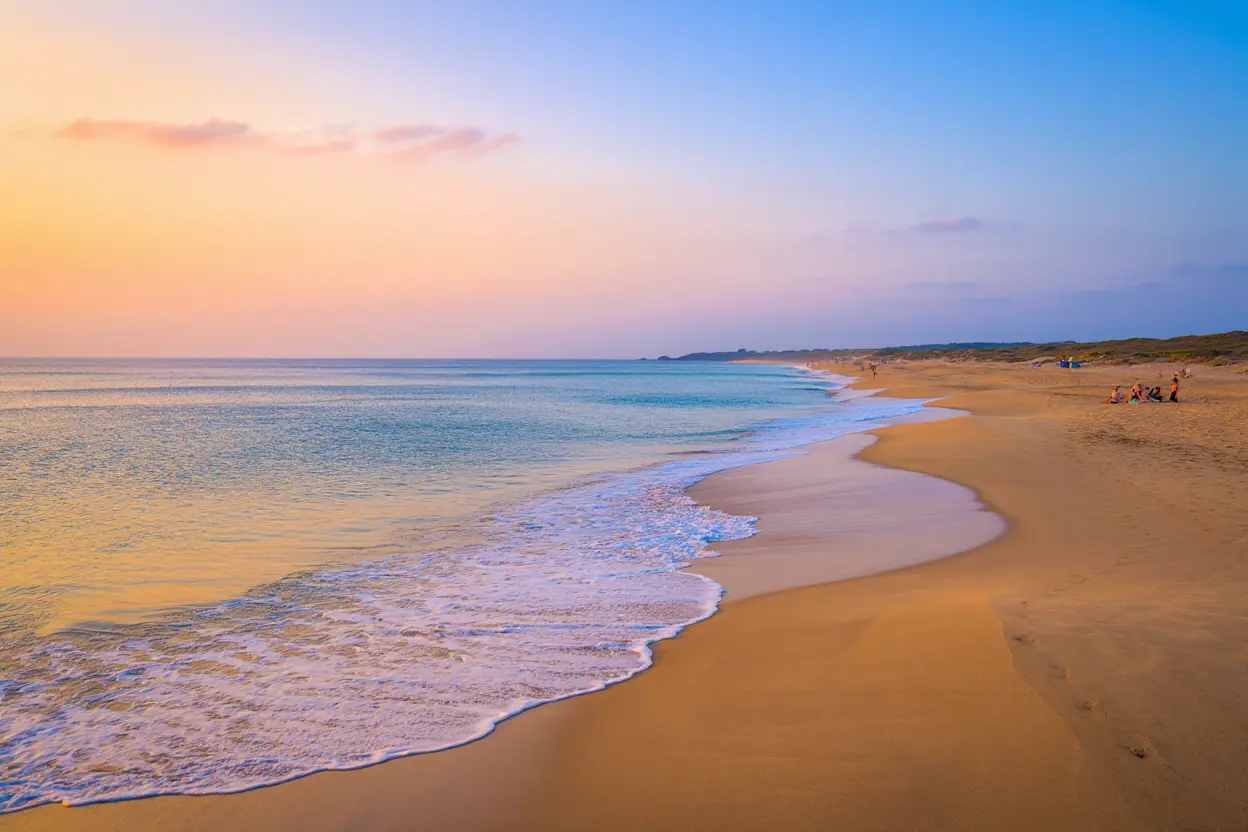
That calm character continues along the northern promenade, where paddleboards and kayaks can be rented with ease: equipment is available for a range of experience levels. A boat trip through the Ria Formosa Natural Park brings the landscape into sharper focus, from shifting sandbanks to quiet feeding grounds. Keep an eye out for greater flamingos and spoonbills in the shallows.
Beyond the lagoon, the ocean side of Ilha da Fuseta is shaped by stronger breezes and a more open stretch of water. In practice, this is where kitesurfers tend to head, with local schools offering tuition for beginners as well as support for more experienced visitors. Snorkelling is another option when conditions are clear, with marine life visible among the seagrass beds.
- Paddleboarding: Rent equipment on the promenade and enjoy the calm lagoon waters, particularly well suited to beginners.
- Kayaking: Join a guided outing to explore quieter channels within the Ria Formosa Natural Park.
- Kitesurfing: The Atlantic side offers steady wind conditions and open water suited to the sport.
- Snorkelling: Clear water and sheltered areas reveal marine life around seagrass and natural rock pools.
- Beach volleyball: Designated courts on the sand make for an easy, informal game.
From there, the village harbour opens up other excursions, including dolphin-watching trips and sport-fishing outings. During low tide, clamming on the wet sand remains a familiar local pastime. Worth noting: local regulations and harvest limits should always be respected.
Wildlife Watching & Nature Trails in Fuseta’s Ria Formosa Natural Park
The same sense of variety extends onto land, where the distinctive ecosystem of the Ria Formosa Natural Park frames Fuseta’s shoreline. An early morning walk often brings the best light for photography, along with good chances of spotting flamingos and other wading birds. Dunes, salt marshes, and wetlands give this part of the Algarve its particular coastal character.
From there, the Ecovia do Litoral passes directly through Fuseta and lends itself to unhurried bike rides past orange groves and low-lying fields. Walking trails continue through quieter sections of the park, leading to open viewpoints across the lagoon and coastline. The difference lies in the pace: these are routes best suited to those who value observation over hurry.
That slower rhythm also suits the area’s wildlife, which is one reason the lagoon draws eco-tourism throughout the year. Local guides lead specialised excursions that explain its role as a fish nursery and migratory habitat. For many discerning travellers, that is the kind of detail that makes time in Fuseta feel grounded in place rather than simply scenic.
Island Excursions: Ferries to Ilha da Fuseta & Ilha da Armona from Fuseta Beach
Regular ferries leave from the village quay, linking Fuseta Beach with two striking barrier islands. The atmosphere there is quite different from the nearby family-friendly mainland beach: quieter, more open, and shaped by the lagoon and the Atlantic. For a considered beach day from Fuseta, it is a natural starting point.
Ilha da Fuseta: Atlantic Beaches, Golden Sand & Surf Conditions
Ilha da Fuseta stretches for roughly six kilometres of open sand facing the sea. It is known for steady winds and surf-friendly waves, with a sense of distance from the village that becomes clear as soon as the boat pulls away. The western dunes are broad and lightly occupied, well suited to a long walk with little interruption.
Praia da Fuseta tends to suit confident swimmers drawn to the Atlantic’s movement rather than the stillness of the lagoon. Amenities are simpler than on the mainland, yet the setting has its own appeal: pale white dunes, clean horizons, and generous reaches of sand. The difference lies in the mood, which is more rugged and more exposed.
Ferry service: A frequent boat service runs during daylight hours from April to September. In winter, crossings are less frequent, so it is worth noting that timetables should be checked in advance. A water taxi can also be arranged when regular ferries are limited.
Ilha da Armona: Family-Friendly Island Beach with Shallow Sand & Rock Pools
From there, a short ferry ride brings visitors to Ilha da Armona, where gentle shallows and wide dunes create a softer rhythm. It is particularly well suited to an unhurried beach day: space for sandcastles, easy paddling, and long stretches of quiet shoreline. The southern edge feels calm and lagoon-like, while the northern side offers clearer water for swimming.
At low tide, natural rock pools appear along the shore, forming sheltered places for children to explore. Small fish and crabs can often be seen in the shallows, the kind of detail that slows the pace of the day in the best way. The surrounding landscape also rewards patient birdwatching, with wading birds moving across the waterline.
| Feature | Mainland Beach | Ilha da Fuseta | Ilha da Armona |
| Access | 5-minute walk from the village | 10-minute ferry crossing | 10-minute ferry crossing |
| Water Type | Calm lagoon waters (warm and shallow) | Atlantic waves (cooler, suitable for surfing) | Both lagoon and Atlantic sides |
| Facilities | Full amenities, lifeguards and cafés | Basic seasonal services only | Limited seasonal facilities |
| Best For | Families and young children | Surfing and those seeking solitude | Snorkelling and quiet beach days |
| Crowds | Moderate in summer | Very quiet throughout the year | Peaceful and uncrowded |
Island visiting tips: Amenities on the islands are limited, so it is sensible to bring the essentials: plenty of water, snacks and sunscreen. Worth noting, tide schedules and ferry departure times should always be checked in advance to avoid being stranded.
From there, one point matters more than any other: never attempt to walk between the islands or back to the mainland. The currents in this area are strong and can be dangerous.
Discover more of the eastern Algarve coastline in Casa Fuzeta’s comprehensive Fuseta beach guide, covering tide patterns, sustainability considerations and quieter coves.
Fuseta Village Amenities: Authentic Fishing Village, Markets & Local Attractions
Beyond the broad sands of Fuseta Beach, the village offers a quieter pleasure: everyday Portuguese life shaped by the lagoon and the fishing trade. Home to around 2,000 residents, it remains a place of working boats, low-key squares and welcoming tavernas serving some of the freshest seafood in the Algarve.
Dining & Local Seafood Culture in Fuseta Village Harbour
That same sense of place is most visible each morning near the harbour, when the daily market begins to stir. Locals come for fish bought directly from fishermen, while the waterfront promenade fills more gradually with cafés serving strong espresso, regional wines and views across the Ria Formosa.
- Borda d’Água: Known for charcoal-grilled fish and cataplana stews, served with wide views over the lagoon.
- Maresia: A contemporary beachfront restaurant well suited to grilled octopus and crisp wines from the Eastern Algarve.
- Tapas do Nik: A lively spot by the sea for inventive small plates and local craft beers.
- Village cafés: Traditional cafés for a pastel de nata, strong coffee and simple breakfast favourites.
From there, the promenade takes on a different character by early evening. Sunset is especially appealing here: families stroll, fishing boats catch the last of the light, and in summer the seafront often hosts acoustic music and artisan stalls with handmade crafts, the kind of detail that gives Fuseta its easy rhythm.
Nearby Towns: Olhão, Tavira & Eastern Algarve Cultural Attractions from Fuseta
The village also sits within easy reach of some of the Eastern Algarve’s most rewarding towns. Olhão is around 15 minutes away by bus and is known for its Moorish-influenced architecture, as well as its Saturday market, the largest in the region, with stalls of fresh produce and seafood.
Heading east, Tavira is roughly 20 minutes away via the N125. There, Roman remains, old castle walls, elegant squares and calm riverside gardens make a well-judged half-day excursion; the difference lies in its slower, more formal atmosphere.
Beyond these two towns, reliable public transport makes it straightforward to explore the wider coastline, from Faro’s historic centre to the Spanish border. Worth noting: the Ria Formosa Natural Park headquarters in Olhão offers guided boat tours and educational programmes focused on the conservation of this distinctive wetland landscape.
Where to Stay in Fuzeta: Refined Lodgings and Coastal Villas
The Eastern Algarve rewards those who base themselves within walking distance of the water. A quiet network of streets leads directly to the tidal lagoon and the ferry quay: here, the daily rhythm revolves around the departing boats.
Refined Alternatives: Casa Fuzeta and Boutique Stays
For those seeking an elevated retreat, Casa Fuzeta represents a thoughtful restoration of a 1903 town manor. Four en-suite bedrooms offer quiet sanctuary, while the private rooftop lap pool looks out across the shifting sands of the Ria Formosa. The difference lies in the preservation of original architectural details alongside contemporary comforts.
Beyond the threshold of the villa, the gentle promenade of Fuzeta unfolds. This position allows guests to transition seamlessly from a quiet morning on the terrace to a departing boat charter: the barrier islands of the outer reef are mere minutes away by water taxi.
Travellers wishing to combine a stay here with broader exploration can look to boutique offerings in historic Olhão or Tavira. These neighbouring towns provide a contrast of grand architecture and formal dining, yet they lack the direct, unhurried simplicity of Fuzeta itself.
Further west, the manicured fairways and Michelin-starred restaurants of the Golden Triangle present a different pace. In contrast, the charm of the eastern coastline remains rooted in its low-lying salt pans and sleepy fishing ports.
Planning Your Stay
Securing a waterfront property during the high summer months requires early planning. The shoulder seasons of late spring and autumn offer a gentler climate: warm afternoons are perfect for cycling along the quiet salt pans.
Well-appointed residences in the area typically feature private terraces oriented toward the lagoon. Dedicated storage for outdoor equipment is a welcome inclusion, especially for those utilising the coastal cycling paths.
Arrangements for airport transfers, private chefs, or bespoke boat charters can be coordinated through trusted local hosts. Once you arrive, a tailor-made excursion into the quiet channels of the Ria Formosa reveals the true allure of this unspoilt maritime reserve.
Planning Your Fuseta Beach Trip: Best Times, Packing & Local Guide
A successful day at the beach relies on good timing, sensible preparation, and a little local knowledge. This practical guide helps make the most of a visit to the golden sands of Fuseta.
Best Times to Visit Fuseta Beach: Seasons, Crowds & Water Temperature
Spring, from April to June, brings comfortable temperatures of 20–24°C, vibrant wildflowers, and active birdlife. It is an excellent window for time outdoors before the height of the summer crowds.
From there, early autumn, especially September and October, offers warm sea temperatures of 23–26°C and a softer golden light much valued by photographers. Visitor numbers also fall noticeably compared with midsummer.
Summer brings reliable sunshine across the Algarve, with all amenities open: midday temperatures regularly exceed 30°C. Arriving at Fuseta Beach before 10:30 am helps secure a patch of shade and avoids the worst of the parking congestion.
In contrast, winter suits travellers in search of quiet, with mild temperatures of 15–18°C that are well suited to a peaceful coastal walk. While some island facilities close, the mainland beach remains accessible throughout the year.
Packing Essentials for Fuseta Beach: What to Bring
Good timing leads naturally to good preparation. High-factor reef-safe sunscreen, a wide-brimmed hat, and protective clothing are worth packing, as the summer sun here can be intense.
A reusable water bottle is essential, particularly for a trip to the island where services are limited. The difference lies in the small practicalities: a tide timetable, a little cash for the ferry, and lightweight footwear for hot sand all make the day easier.
Although snorkelling gear can be rented on site, bringing personal equipment is often more economical for longer stays. That is the kind of detail that tends to matter more once the day is under way.
Fuseta Beach Rules: Preserve Ria Formosa Natural Park & Local Etiquette
Preparation also extends to the setting itself. To help preserve the Ria Formosa Natural Park, visitors should avoid stepping on fragile dune plants and take all rubbish away with them.
Wildlife should always be observed from a distance in order to protect this delicate ria ecosystem. In practice, that means leaving the landscape much as it was found.
Fishing or collecting shellfish requires a permit, so it is sensible to check with local authorities before gathering clams from the sea. Rules can change, and local guidance is the most reliable reference.
Nudity is not generally practised on the mainland beach, although some remote island stretches do attract naturists. Topless sunbathing is broadly accepted, while dogs are usually permitted only outside lifeguard service hours.
Beyond the practicalities, Fuseta’s maritime heritage adds depth to any stay. Learn more through this resource on Fuseta history.
Fuseta Beach FAQs: Is It Worth Visiting? What Activities Are Available, and How Do You Access the Islands?
Is Fuseta, Portugal, worth visiting? Why choose Fuseta Beach over other Algarve beaches?
Yes. Fuseta remains an authentic fishing village, with a quieter rhythm and a character distinct from the Algarve’s larger resort towns: Blue Flag beaches, the protected landscape of the Ria Formosa, and little of the dense commercial development found elsewhere.
That sense of contrast shapes the stay. The area offers two very different coastal settings: the still, shallow waters of the lagoon and the more open Atlantic shore, which makes it suited both to slow days by the water and to more active time outdoors.
From there, the appeal broadens. Close proximity to the cultural centres of Olhão and Tavira adds depth to any stay, while discerning travellers often value the smaller-scale accommodation and straightforward access to respected golf courses nearby; the difference lies in the balance between atmosphere, ease, and setting.
What water sports and activities are available at Fuseta Beach?
Water-based activities are a central part of the experience. In the calm lagoon, paddleboarding, kayaking, and snorkelling are among the most popular choices, while the Atlantic side of Ilha da Fuseta often sees lessons in kitesurfing and windsurfing when conditions allow.
Beyond the water, the surrounding wetlands of the Ria Formosa lend themselves to birdwatching excursions and gentle cycling along the Ecovia Litoral. Guided boat trips are also widely available and can reveal more of the lagoon system: flamingos in the shallows, and on some outings, dolphins further out at sea.
On the beach itself, the pace is simpler. Families spend time playing volleyball, building sandcastles, or exploring tidal pools, while others prefer an evening walk along the promenade or a day trip into the historic centres of Olhão and Tavira, the kind of detail that makes Fuseta easy to return to for more than a single afternoon.
How do I safely access the island beaches?
The safest route is by scheduled passenger ferry from the harbour in the village. It is important not to attempt the crossing on foot over exposed sandbanks, even at low tide, as channels shift and conditions can become unsafe very quickly.
In practice, a return ticket is inexpensive, usually around €2, and summer services are frequent, often running every ten minutes. Ferries connect to Ilha da Fuseta and Ilha da Armona, generally operating from morning until early evening during the peak season.
As with any island crossing, timings matter. Water taxis provide access throughout the year at a higher fare, though it is worth checking the current timetable at the ticket office before setting out; facilities on the islands can be limited, so bringing water and anything needed for the day is sensible.